As a mother and a writer, I love it when I see kids absorbed in books. When my children were in their early school years, I used to provide reading help in the classroom. It was an amazing experience, seeing the light dawning in kids’ eyes when it all suddenly seemed to click! For those of you with young children, here are some tips to help you encourage them to learn to read. They work for older, reluctant kids too …

1. Read to them regularly

Ideally, you’ve been reading to your children long before they start school. By sharing stories, often while cuddling up at bed time, you’re showing them that books are something to be valued and enjoyed. They also get used to hearing the rhythm and flow of well-written sentences, which will help them become better writers one day, too.

2. Be surrounded by books

Kids are more likely to pick up a book if there are plenty of them around. Have appealing books in the house within easy reach. Young children are drawn to colourful illustrations. Older children are drawn to topics that interest them; try to have a selection of fiction and non-fiction books on those topics accessible. If possible, make trips to the library with your kids. Local libraries usually have story reading and activity days, especially during school holidays. It’s also a chance for you to have a bit of a break and leaf through some books while the kids are safely occupied.

3. Set an example

I’ve come across many parents who bemoan that their children never read. If I ask them what they are currently reading, they get all shifty. They don’t have time, they say, sighing gustily, but they’d really like to … I don’t get it. For me, that would be like saying I don’t have time to breathe! All right, maybe not everyone’s such a raging readaholic, but keep in mind that kids copy what they see. If they see you reading for enjoyment, they’re more likely to follow suit.

4. Listen to them read

It can be hard to listen to your child’s stumbling attempts when they first try to read. Try not to be impatient or critical. Focus on them picking up the gist, rather than picking out trivial errors. Enjoy a laugh with your child if some of the mistakes they make are funny or silly. And don’t forget to keep reading to them – this shouldn’t stop just because they’re learning to do it for themselves. They’ll let you know when they’ve outgrown story time – don’t rush them!

5. Don’t impose your taste

Trying to force your kids to read what you consider ‘worthy’ is a recipe for disaster. It’s okay to suggest and encourage, but ultimately let them decide for themselves. This is particularly important as they enter their teens. You might want to keep a parental eye out for books that may be inappropriate for their age, but other than that, give them leeway. They’re more likely to become life-long readers if they select books that resonate with them. And you might learn something new! I’ve discovered many great books and authors through my children’s reading, some of which have now become my favourites, too.

Photo credit: ashbrian / Foter.com / CC BY-NC-SA Jenn Durfey / Foter.com / CC BY

Helen Armstrong is the president of the Sutherland Branch of the Fellowship of Australian Writers New South Wales Inc. I met her at last November’s Writers Unleashed Festival, an invaluable weekend of networking and workshops. Helen was kind enough to agree to be interviewed for my blog.

Helen Armstrong

Helen Armstrong, President of the Sutherland branch

1. Can you explain briefly what the FAW is?
We promote writing and provide an opportunity for members to support each other. It’s important for us to have someone to bounce off, as writing can be a very solitary occupation. This is dangerous as it can lead to exploitation by unscrupulous people. We’ve heard so many horror stories over the years and we’ve managed to rescue quite a few authors.

2. What are the organisation’s key aims?
We promote excellence in writing. We encourage people to join and enjoy the help, support and knowledge of other members. Our members are alerted to competitions and writing opportunities, and we also offer a manuscript appraisal service.

3. How often are meetings held?
Meetings are held once a month. Our branch meets at Sutherland library in Sydney, but there are branches all over the state. We even have an isolated writers’ group, who meet either online or in some other capacity. Our meetings last three hours, with a tea break in the middle. The tea break is the perfect time to pick other people’s brains and learn a few extra tips!

4. What happens at the meetings?
To a large extent, meetings are led by the members’ needs. We try to cater for their interests and goals. Generally we have writing exercises, workshops and guest speakers. Occasionally we manage excursions. We try to provide feedback and offer encouragement. We discuss how members are progressing, whether they’ve submitted to a publisher or had anything accepted. At our recent Christmas party, we each had to read five minutes of something we’ve written. It was great fun, as well as an excellent way to practice our presentation skills.

5. What does your role as President of the Sutherland branch entail?
I chair meetings and keep things in order – which is usually not much of an ordeal! I also ensure an entry is submitted to Writer’s Voice, the FAW’s newsletter, which goes to members on a quarterly basis.

23806-wu6. What is your involvement with the Writers’ Unleashed Festival?
This is one of the most exciting things the Sutherland Branch created. We’ve been running festivals for five years now, and each year they become bigger and better. In 2012, it was held in the Gymea Community Hall. Last year it was held at the Tradies club. The facilities were fantastic, and allowed us to do so much more. Each year, our list of contacts grows. Many of the guest authors are happy to come back the following year.

7. Can you also tell us about the Children’s festival day?
This is held the Monday after the weekend festival. Primary schools in the Sutherland and St George districts are invited to send their keenest writers to attend the day, where they get to meet well-known authors and attend stimulating workshops. The day is always a huge success and the children love it.

8. How can people join the FAW?
Details are on the website at http://www.fawnsw.org.au/membership.html. People can also contact me directly regarding the Sutherland branch at jarmstro@mail.internode.on.net.

9. Can you leave us with your favourite writing quote?
I’m quite a fan of Terry Pratchett and I love what he says: ‘Writing is the best fun you can have by yourself!’

Are you near your writing desk? Have a look at what’s lurking on it right now. Do you really need the [select from below] scented candle, outdated newsletters, empty drink bottle, chocolate wrapper, tiny cactus, stuffed toy, CD, old birthday card, etc etc?

Our surroundings reflect our mental state. Messy desk, messy mind. Some people claim clutter’s a sign of a creative free spirit, but I suspect that’s just wishful thinking!

Clutter creates stress and anxiety. It’s distracting, it encroaches on our space, and it’s hard to find what we need. I have a theory that many cases of writers’ block are actually caused by clutter. It’s easy to lose focus when you are overwhelmed by so many things competing for your attention.

When I was a uni student, my desk used to be perfectly clean, except for the things I needed for a specific task. Everything else was piled up in stacks on the floor behind me. Still messy I know (and it drove my mother nuts), but at least my eye line … and my head … was clear.

What do you actually need to write?

Ask yourself what you need on your desk. Really need, as opposed to what you’ve merely grown used to seeing. Look at each item in turn. Does it directly help with the task at hand? If it doesn’t, ditch it!

I think it’s possible to distil the essentials down to:

  • Computer
  • Pen
  • Paper for jotting down ideas
  • Research notes / plans if relevant
  • Desk lamp if needed
  • Coffee mug or equivalent (well, we’re not robots!)

Everything else can go in the drawers or on the floor. At the end of your writing session, you can pile your desk back up again if you don’t have anywhere to store your stuff. Just be sure to declutter again next time you sit down to write.

You might disagree with me. Back in the days when I had a proper job, my supervisor once told me off for having a tidy desk. She said it made me look as if I wasn’t working hard! That’s partly why I love freelancing so much …

Anyway, try this experiment. Take a photo of your desk right now, mess and all. Leave it like that the next time you sit down to write. When you finish do a thorough declutter, removing everything you didn’t actually use in that writing session. Photograph your desk again. Next time you write, sit down and get stuck straight in, minus the mess. See if you feel more relaxed and write more freely when you don’t have a stack of old bills nudging your elbow. When you’re done, pull out the before and after photos and compare them. If you try this, let me know how you go!

Photo credit: Wm Jas / Foter.com / CC BY-SA

We’re already one week into January. In case you haven’t made your New Year’s resolutions yet – or you’ve broken them already – feel free to borrow mine!

This year:

1. I will finish writing my novel.

2. I will finish writing my novel.

3. I will finish writing my novel.

4. I will not feel guilty about eavesdropping. It is research.

5. Chocolate is NOT a writing aid, no matter how much I want it to be.

6. I will de-clutter my writing space.

7. I will turn off the Internet while I am writing, and not constantly check ‘one last fact’.

8. I will not automatically assume that everything I write is crap.

9. I will not automatically assume that everything I write is brilliant.

10. I will finish writing my novel.

 HAPPY 2014 everyone! May all your writing dreams and desires come true :)

Photo credit: James Marvin Phelps / Foter.com / CC BY-NC

Do you have an all-time favourite childhood Christmas present? I was 9 when I received mine: a personalised story book about me and Santa. It was thrilling – partly because it was so amazingly Christmassy – but mostly because I saw my name printed in a book! I knew I wanted to be a writer when I first learned to read. This great gift confirmed it :)

IMG_0059[1]IMG_0060

As you can see, I’ve still got the book. Tainted by age and starting to fall apart (aren’t we all?) but the memory of wide-eyed excitement is still fresh. I look at it now with a critical adult’s eye and see it wasn’t particularly well written. Growing up sucks, right? But back then I delighted in it with the joy only children seem to be able to muster.

Being able to recall these feelings and instil them in our work is essential for writers, especially if we write for children and teenagers. It’s why I love writing for young people so much. They’re not jaded by the world like adults often are. Everything is bright and new and intense. And we’re privileged to be able to see the world through their eyes once more.

Christmas and New Year are about birth and renewal. An annual reminder to adults (kids don’t need reminding!) that the world is full of life and hope and magic.

Thanks to all who read my blog for taking the time to look at what I’ve got to say. I hope you have a wonderful Christmas!

They say it’s a small world, but mine just got even smaller and more remarkable. When I first moved into my current house, a neighbour told me that author Dianne Blacklock grew up here. The house has been knocked down and rebuilt since she left, but the idea still spun me out. A friend suggested the house is built on creative ley lines – what a lovely thought :)

Dianne Blacklock, author

Dianne Blacklock, author –
once lived in my current house!

I recently met Dianne at a writers’ festival and took great delight watching her expression when I told her where I live. I (rather nervously) invited her over to see what we’ve done to the place and to catch up on neighbourhood gossip. She very graciously agreed, and I took the opportunity to interview her for my blog. Her wit and wisdom are as evident in person as they are in her books. She was even nice about the fact that this rather large, brashly modern house has obliterated the character-filled home she grew up in…

1. Did you always want to be a writer?
I’ve always enjoyed writing and found it came naturally to me. For a while I considered journalism. I did a Bachelor of Arts majoring in Literature straight after high school, then worked in the public service. It was when I was pregnant with my second child that a friend suggested we write a Mills & Boon together. The rejection letter came all too quickly, so we decided to write what we actually wanted to write! I never used to tell people I was working on a book, but I eventually became brave enough to show some friends. The feedback I had was very encouraging and I started to take my hobby more seriously.

2. Did you have many initial rejections, or did success come easily for you?
I sent my first manuscript to two publishers and expected rejection. I received a wonderful email from Pan Macmillan on my birthday, but didn’t see it. The next day I got a phone call and was told the good news. They wanted to see the rest of my manuscript. But – here’s the twist. It was rejected! My story was a bit dated, too 1980s glamorous, but luckily they saw something in me that they liked. We discussed my future direction, I wrote another story and that was accepted.

3. How would you describe your genre?
It can be largely categorised as contemporary women’s fiction. There are many subgenres, such as rural fiction and country town fiction, but my books are broader based and harder to classify. I tend to write about women with families, rather than young single women. I don’t worry about classifications while I’m writing. I simply try to tell a good story.

4. Do your books have similar themes or concepts?
My books generally start with a woman facing a time of upheaval, when everything she’s used to in life is flipped on its head. They’re stories about women exploring their potential, and I always want them to have some hope. My women are flawed and make mistakes, but they grow throughout the book. I’m also careful not to portray men as jerks. I have three brothers and four sons, so I don’t like men being portrayed too negatively.

5. What comes first for you, character or plot?
Usually I get an idea that I’d like to explore, some sort of issue or a problem. I create a heroine that I place in that situation. The early chapters of my books are about developing the main characters, moving them on from the setup. The plot then flows fairly naturally from that. I find that once my characters are formed, the book writes itself.

6. What is your writing schedule like and how long does it take you to write a novel?
I’m not a morning person. I find 3 to 8 pm to be the best writing time for me. I think about a story for a few months before I begin to write it, and take about eight months to write each book.

The Best Man 2013, Pan Macmillan

The Best Man
2013, Pan Macmillan

7. You’ve recently released your ninth novel The Best Man. Can you tell us a bit about it?
This is the first book I’ve written where the title just came to me, and the book developed from that. I started thinking, ‘Who is the best man?’ My main character Madeleine is a publicist working for a book publisher, who is about to marry an author. Everything seems set to go until the best man turns up!

8. Where is The Best Man available?
You can get it in all book stores, as well as Big W and Target. You can also buy it online, for instance at Booktopia and Boomerang. It’s also available as an ebook.

9. Where can readers find out more about you?
The best place to start is my website: http://dianneblacklock.com/.

10. And now the question no other interviewer can ask you – what do you think of what we’ve done to your old house?
I’m glad to see you’ve still got a nice-sized garden. It would have been lovely to have had this house when we were growing up here!

In my innocence, I used to think these two words could be used interchangeably. I soon found out I was wrong. When I first started writing professionally, I quickly discovered that many people get fired up by the author / writer distinction.

What I’ve encountered
When my first book was published, I proudly announced to anyone who’d listen that I was a writer. The reactions I received were varied. Some people were interested, some were envious, most were indifferent. But, amazingly, some seemed offended, even hostile! ‘What sort of writer?’ they’d challenge. ‘What have you written?’ I suddenly felt I had to justify myself, something I’d never had to do as a lawyer.

The implication was that if you hadn’t written a book produced by a publishing company, you couldn’t call yourself a writer. Well, my book Everyday Law satisfied that criteria, making my challengers sink into sullen silence. All except one, who demanded to know how much I’d paid to get the book published. I must confess I rather enjoyed explaining advances and royalties to her …

It was about then that I discovered the situation was even more complex. Someone explained that a writer is someone who wants to be published, while an author has been published. And in book form, too. Someone who’s written magazine or journal articles can’t call themselves an author. So that’s pretty much what I’ve accepted over the years.

However, the current proliferation of self-publishing rather muddies the waters, and has made me question my definitions. Can you call yourself an author if you pay for the privilege? Does it make a difference whether you’ve produced a print book or an ebook? And if a self-published book sells far more copies than a traditionally published book, what then?

But really – does it matter what you call yourself? By doing a quick internet surf, I’ve discovered that people get just as worked up as ever.

What I’ve decided

I’ve re-adjusted my definitions, at least in my own mind. It all comes down to motive. I think a writer is someone who writes primarily for their own pleasure and consumption, and maybe for their immediate circle. An author, however, writes for an audience – an audience of strangers.

So, if you write, you’re a writer. If you intend your work to be read by the public and it gets published (one way or another), you’re an author. And if I want to be really picky, I think the term ‘aspiring writer’ to describe someone not-yet-published but trying to be is a misnomer. It should be ‘aspiring author’.

Can’t you be both?
I think it’s possible to be both a writer and an author – they are different stages of the same process. When I’m sitting at my computer, all alone, I’m writing for myself because I love it so much. At home I’m a writer, free to dream, free to play, free to work in my pyjamas. But when I’m presenting myself to publishers and the reading public, I’m an author. Professional, well-groomed, not a slipper in sight. That’s when my book stops being just my book, and becomes a product that I am ultimately trying to sell

So what do you think?
Is there are difference between writers and authors? Should there be a difference? I’d love to read your comments!

Recently, I was fortunate to meet Pamela Cook, the author of two rural fiction novels. Her new book, Essie’s Way, promises to match the success of Blackwattle Lake. She was kind enough to agree to be interviewed for my blog!

Pam-3

Pamela Cook, author of rural fiction

1. Which writers inspired you the most when you were growing up?
I was an avid reader as a child, reading anything and everything, so it’s hard to narrow it down. As a young reader I loved May Gibbs’ Snugglepot and Cuddlepie, which I later enjoyed reading to my own kids. Blinky Bill was another, and The Muddle Headed Wombat. I remember bawling my eyes out over Seven Little Australians by Ethel Turner. When I was a little older I was smitten with The Hobbit and Lord of The Rings. And Gone With The Wind had a huge impact on me when I read it as a teenager. See, I told you I was pretty eclectic!

2. When did you decide you wanted to be a writer?
I guess I’ve always dabbled with writing – poetry and journals as I was growing up, followed by travel journals in my twenties and I did a correspondence course in journalism in my early years of teaching. It wasn’t until I was turning 40 that I decided I wanted to try my hand at something more creative and enrolled in a Masters in Creative Writing at UNSW. It was a fantastic course covering a variety of different styles and opened my eyes to the endless possibilities writing allowed. That’s when I really became hooked.

3. Did you have initial rejections or did success come easily for you?
I’d been writing pretty steadily for 12 years before I had my first novel published, sending out smaller prose pieces and poetry, having a few things published in anthologies and working on my first novel. I did send that novel to a few agents and publishers and received rejections but in hindsight it still needed work. It’s still in the drawer and I hope to do something with it one day. My first published novel, Blackwattle Lake, was accepted for the Hachette/QWC Manuscript Development Program in 2011. I hadn’t sent it anywhere else and was lucky enough to have it picked up that first time.

4. What genre do you write in – and what draws you to this genre?
My current genre is Rural Fiction. I didn’t intend to write in this genre but happened to write a Women’s Fiction novel with a rural setting so that’s where it was placed. I’m totally happy with that though – I love rural settings, horses, strong, independent heroines and a touch of romance which all happen to fit perfectly within this particular genre.
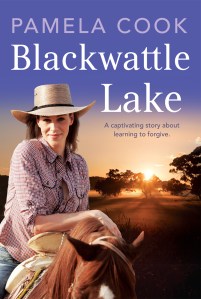
BLACKWATTLE_LAKE_Cover

Blackwattle Lake

5. At what time of day do you do your most productive writing?
It’s changed over the years. It used to be very early morning or late at night when everyone else in the house was asleep. Now I find it’s the 9am-1pm time slot. The house is empty and I’ve woken up enough for the brain fuzz to have disappeared. I do love morning pages though – 3 pages of free form writing first thing in the day – and hope to get back to doing those again soon.

6. Do you aim for a certain amount of words per day or set other similar goals?
Both my published novels were written fairly quickly – at least the first draft was. When I’m at that stage I aim to get a minimum of 2000 words a day written and try not to worry about the quality while I’m drafting. On good days I might get up to 5,000 words done but it’s usually around 3,000. I tend to write and edit in scenes so I can get immersed in that particular plot point but sometimes life gets in the way.

7. How much research do you do?
Initially not much, if any. I like to get the story out onto the page and then have something to work with. If there’s something that needs more research I just bluff my way through and work on it in revision. For each book I’ve had some research to do which has involved things like interviews, general google research or reading non-fiction books and articles related to the topic. I like to visit the setting the book is written in and spend some time jotting down notes, taking photos and absorbing the atmosphere so I usually get some sort of road trip in, which is always nice.

8. Which well known book do you wish you could have written?
I absolutely adore Tim Winton so anything by him, especially Cloudstreet or The Turning. The Book Thief by Markus Zusak would be another just for its sheer ingenuity and original descriptions. The one book that made me think ‘I want to write a book like that’ would be The Hours, by Michael Cunningham. I love the way he moves so easily between different character viewpoints, interweaves storylines and creates such a sense of being in the moment. All things I aspire to.
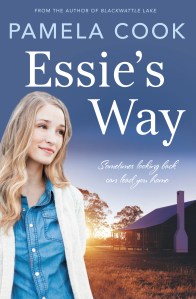
Essie's Way front cover

Essie’s Way

9. What would you like to share about yourself that your readers might not know?
I’m a Writer Ambassador for an organisation called Room to Read which builds schools and libraries in a number of developing countries and provides scholarships for girls’ education. I first became involved when my writing group, The Writers’ Dozen, published an anthology of our writing (Better Than Chocolate) and donated the profits to Room to Read. We were able to raise enough to build a library in Nepal. I then became their Students Helping Students Coordinator here in Sydney and spoke to school students about the work the organisation did. I was fortunate to visit some schools in India a few years back and see how life-changing the programs really are. I’m now over the moon to be a Writer Ambassador and be able to tell people about the good work Room to Read is doing to promote literacy and alleviate poverty.

10. When was Essie’s Way released? Can you tell us more about it?
Essie was released on December 1st. It is available in bookstores and the larger chains like Target, Big W and Kmart.

It’s about a young woman on the brink of marriage who discovers her supposedly dead grandmother may actually be alive. She sets out on a road trip to find out more and to make important decisions about her future. It’s a double narrative told from the viewpoint of Miranda, the younger character, and an old recluse called Esther. Set in the fictional town of Pelican Point on the south coast of NSW it’s about following your intuition, being true to who you really are and being brave enough to face the truth. There’s also horses and romance – something for everyone!

11. Is there anything you’d like to add that I haven’t covered?
The thing I love best about writing is connection – with myself, with ideas and with readers. I’d love to hear from anyone who writes, aspires to write or anyone who has read my books. You can contact me through any of the sites listed here:
Website: www.pamelacook.com.au
Facebook: www.facebook.com/PamelaCookAuthor
Twitter: @PamelaCookAU
Email: pamela@justwrite.net.au

Published by Wombat Books, Patience belongs to ‘The Invisible Tree’ picture book series. Conceived by author Kirrily Lowe, the series aims to impart big values to little people. Along with her husband, Kirrily is a pastor in Sydney. Her stories explore the character traits we’re all born with, and how we can grow and use them in our daily lives. Each book begins with the affirmation:

Kirrily Lowe

Kirrily Lowe, author of ‘The Invisible Tree’ series

‘There is a little tree
That lives inside of me
It wants to grow big and tall
Even though I am very small’

Patience is the story of a young boy named Sammy, waiting for a special parcel to arrive. He starts off waiting patiently, but his tolerance is tested as the days pass and the parcel doesn’t turn up. Encouraged by those around him, he doesn’t give up hope.

When the parcel eventually arrives, he discovers another gift he’d been given. It didn’t come in the post. It was already inside him. It was, of course, patience!

The story teaches children – as well as many of their parents! –  the value of being patient. It shows the strength we can gain from it … something I must admit I’m still trying to learn myself … Other books in the series explore Love, Joy and Peace.

Patience Book

Patience

The text for each book in the series is teamed with Henry Smith’s unique illustrations. Made using collages of recycled and hand-made papers, the look is distinctive and fresh.

Each book in ‘The Invisible Tree’ series imparts a message in a fun way. Kirrily Low may be a pastor, but there’s nothing preachy about her engaging stories!

You can find out more at www.theinvisibletree.com.au

I wrote this book review for Creative Kids Tales and they kindly allowed me to reproduce it on my blog.

My head’s still spinning from all the things I learned at the brilliant Writers Unleashed Festival last weekend: http://shirewritersfestival.weebly.com/. Entering a mad scribbling frenzy was the only way to tackle the editors’ panel, and I’ve managed to distil their most crucial tips into the three top things editors require.

On the panel were Emma Rafferty of Pan Macmillan, Beverley Cousins of Random House and Roberta Ivers of Simon & Schuster – each actively seeking new writers.

Emma Rafferty and Beverley Cousins

Emma Rafferty of Pan Macmillan and Beverley Cousins of Random House

1. Target the publisher selectively

Don’t send your manuscript indiscriminately to every publisher you can find. Take the time to study them closely. Look at their website, visit bookstores. Get to know their list. Be as up to date as possible and target publishers that produce your type of book. If a publisher primarily produces romance novels, for instance, don’t send them a science fiction manuscript!

If a publisher seems a good match for your work, check that they do indeed take unsolicited submissions. If they do – then how and when? Which leads to the next point …

2. Follow submission guidelines to the letter

Visit the publisher’s website to check how they want to receive submissions. Do they prefer electronic or hard copy? Electronic submissions are becoming more common, but don’t assume – check first!

Many publishers don’t want to see the entire manuscript up front. They might ask for a certain number of chapters, pages or words. They will probably also want to see a synopsis, or a concise summary of your novel. If they like what they see, they may ask to see the whole thing. Publishers sometimes specify a font size and type. If they don’t, stick to the standards like 12 point Times New Roman, Courier or Arial. Usually they want double-spacing for the manuscript. Whatever they specify – make sure you do it! It shows you take a business-like approach and respect their requirements.

Many publishers don’t accept unsolicited submissions all year round. It’s becoming more common to have regular scheduled intakes. For instance, Pan Macmillan has ‘Manuscript Monday’ on the first Monday of every month, and will accept electronic submissions that comply with their guidelines between 10 am and 4 pm: http://www.panmacmillan.com.au/manuscript_monday.asp

Roberta Ivers

Roberta Ivers of Simon & Schuster

3. Keep a commercial focus

Remember that publishing is a business, which seeks to make a profit. Be professional in your cover letter. Don’t make yourself look like a hobbyist; publishers are usually looking for career authors with more than one book in them. And beware of saying your book probably won’t sell many copies but ‘ought to be published’! Make it clear that you know the market. Identify similar books and compare them to your manuscript.

Show that you are willing and able to promote the book. Do you have any media contacts? An interesting back story? Are you comfortable talking to an audience? Demonstrate that you have a social media platform, or at least that you are in the process of creating one. Successful writers have to be able to sell themselves and their books – firstly to the publisher, then to the readers!