gormless_gods_invite_london_launch_partyAt the London Book Fair! In case you’re not familiar, the Book Fair is a global marketplace for rights negotiations and the sale and distribution of content. My new publisher Sweet Cherry Publishing are exhibiting there, and they’ll be celebrating the upcoming launch of our new junior fiction series Gormless Gods and Hapless Heroes with some yummy Greek snacks. I’ll talk more about the first book Tim Baker and the Ancient Curse in a future blog, but for now I couldn’t resist sharing this information. As you may have guessed, the series is based on Greek mythology 🙂


aliensI’m not being flippant or silly. I really have seen a ghost. In fact, the sighting sparked the interest that led to my writing Aliens Ghosts and VanishingsI was intrigued rather than frightened, and wanted to understand it.

The sighting isn’t discussed in the book. It’s nowhere near thrilling or scary enough to warrant a mention! The book looks at major haunts in historic Aussie locations, such as the convict settlement at Port Arthur, the brutal Old Melbourne Gaol and the notorious Sydney Quarantine Station.

No, my sighting happened in a very humble location – my home. Nobody else saw it, so I can’t call on any witnesses to corroborate me. But I know what I saw.

It wasn’t one of those near-waking experiences, where you could feasibly say it was only a dream. It was in the middle of the day and I was wide awake.

My house is large, modern and open-planned. I was walking from one room to another when I happened to glance towards the front door. The security screen door was locked, but the wooden door was open, letting in a light midday breeze. There, standing near the doorstep, was a young man. I saw him very clearly.

He looked to be in his early twenties. He had blond hair with a longish fringe that flopped over his forehead, with a short back and sides. He was wearing a white shirt and high-waisted jeans. His head was tilted quizzically to the side and he had a gentle smile on his face. Nothing malevolent or creepy – just inquisitive.

I stared at him, wondering what he was doing  there. Was he going to approach the house? Did he want to sell something? Was he collecting for charity? But he just stood there, looking. I was about to approach the door to find out what he wanted, when he vanished. Yep. Right before my eyes!

As I mentioned, I was more curious than frightened. Yes, I felt quite shaken, but that was more a case of confronting the unknown. I had no sense that he meant me any harm. Rather it seemed like he was wondering what was doing there. So … was he a previous occupant, wondering what we’d done to his house? I can’t think of any other explanation!

It got me thinking. Assuming ghosts are real (and if they’re not I’m probably going nuts, which is even more scary!) what are they? Are they fading images being played back on something like a psychic screen? Or are they sentient beings, aware of us and what is going on around them? It certainly seemed like he was looking at me. But who knows?

After all that research, I still don’t understand what that figure was. It’s taught me, however, the importance of keeping an open mind. Scepticism is important, but it needs to be balanced. Maybe it’s okay not to have all the answers, as long as we don’t pretend to understand…

Have you seen a ghost? If so, please share your story in the comments!


One of the most exciting things about writing is getting to work with a talented illustrator. You get to see your ideas brought to life in ways that you didn’t know were possible! I was lucky enough to be teamed up with Richard Morden for our recent book Aliens, Ghosts and VanishingsHis drawings range from funny to creepy to downright scary – not just echoing the text, but also enhancing it.

Richard Morden, illustrator

Richard Morden, illustrator

Based in Melbourne, Richard works in a range of styles and is fascinated by Australian culture, history, prehistory and natural sciences, gothic horror and science fiction. He was happy to share his thoughts about this latest adventure.

1. Tell us a little about your research for this project.

I looked up all the people, places and animals to make sure they looked just right. I also added accurate details that weren’t necessarily in the text. The aim was not just to draw what was in the text, but to expand on it in a complementary way, helping to create an informative experience for the reader. Some of the animal drawings were based on photos I have taken in museums and a lot of the landscapes were based on photos from my own reference library. Interestingly, I met some of the witnesses of the Westall UFO sighting years ago at a talk promoting a documentary. I asked them what they experienced and their answers helped inform the Westall UFO illustration in this book: best reference ever.

The Westall UFO sighting

The Westall UFO sighting

2. What was the most surprising thing you learned while researching the book?

I loved the story of medieval African coins being found on the North coast of Australia. As well as being an exciting story of a chance discovery it hints at possible histories beyond the generally accepted accounts of Australia’s past. It left me wondering what wonderful historical surprises yet await us.

3. What was the most difficult part of this project?

Some of the more serious topics covered in the book continue to have an effect on people’s lives to this day. Stories such as the disappearance of Azaria Chamberlain required representation in a way that is informative and engaging yet respectful to those affected. Illustration concepts such as these need more consideration than others. On a less serious note, what does a bunyip look like? Nobody really knows. How then to illustrate a bunyip? I struggled with this question, changing my mind several times. In the text is a suggestion that extinct megafauna could have been a real life basis for the legends of bunyips. Following this train of thought, I sketched a Zygomaturus, an extinct giant marsupial swamp cow, and decided it looked weird enough to fit the bill. What do you think a bunyip should look like?

4. What was the most fun or rewarding part?

Illustrating all the mysterious locations, situations and characters was a lot of fun, but by far the most rewarding aspect was all the learning involved. I was already familiar with some of the stories but many were new to me, and when researching the illustrations I learned even more. Behind the incredible stories is a backdrop of intriguing Australian personalities, culture and history; exactly the kind of subjects I enjoy learning about.

5. What’s the strangest or most mysterious experience you’ve ever had?

What do you think explains it? In 1996 on a cool but sunny spring morning I saw three large black cylinders quietly floating over the western suburbs of Melbourne. I couldn’t identify them so for me at least they were UFOs. Years later I searched on the internet for what I had seen, and found many pictures of floating black cylinders identical to what I remembered. They were real. I am pleased to say they were not aliens, they were solar balloons! Someone had been playing a prank. Look them up, they are strange looking things.

aliensDid a UFO drag a family’s car off the road in the middle of the outback? Is there really such thing as the gleaming-eyed swamp monster known as the bunyip? How did rocks rain from the sky in WA?  And just what became of the prime minister who went into the surf and was never seen again?

Sure, you’ve heard about UFO sightings in far-flung corners of the United States. You’ve heard of Scotland’s Loch Ness Monster. You may have even watched a late-night show exploring conspiracy theories surrounding missing media tycoons. But these stories are for grown-ups, and mostly from overseas. Then there are some stories that are so mysterious that only kids can handle them! Aliens, Ghosts and Vanishings is a book for young readers, all about the extra-terrestrials, the supernatural and bizarre disappearances in our very own backyard. It’s ideal for readers aged 10 to 15, or for anyone who has the burning curiosity of a child!

I’ve always wanted to write a book like this, and absolutely loved researching all these amazing events. I hadn’t realised just how many strange things have happened on our own shores – hauntings, sightings, disappearances. I’m delighted that the book was taken on by Penguin Random House, who did a marvellous job bringing it to life. Richard Morden’s illustrations are brilliant!

I wanted to share my interest in the bizarre with young readers – but I wanted to go further than that. This book doesn’t just relate the (albeit juicy) tales. It encourages critical thinking skills. I don’t force any conclusion onto the readers. Rather, I encourage them to look behind the claims. To ask themselves why people say the things they do. When someone makes an outlandish claim, are they lying, mistaken, or simply telling the truth? Everything needs to be judged on its own merits, maintaining a healthy balance of open-mindedness and scepticism.

Oh, and by the way, I’ve seen a ghost.

Yes. Really.

After getting my first junior novel published nearly two years ago, I felt certain that all would be plain sailing from then on. I had my foot in the door, as they say. It was a rude awakening when I discovered that wasn’t necessarily so – at least, not for fiction. Thankfully my non-fiction work was still going strong, and was indeed more interesting and rewarding than ever.

But still. I’d created a proposal for a five-book fiction series and was sure it was only a matter of time before it found a good home. It was awful when the rejections started coming. I re-read my work again and again, trying to see where I’d gone wrong. I tweaked it here and there. But I still liked it and couldn’t see why it was being rejected. Could I have misjudged the market so badly?

I would have given up if it wasn’t for some feedback I received via the Faber Academy. My work was read by the wonderful Sophie Hamley, who assured me it was merely a matter of finding the right publisher. Someone who liked quirky. She encouraged me to not limit myself to the Australian market, but to approach overseas publishers. I’d never tried that before, and thought it would be too difficult.

sweet cherryActually, it was far easier than I expected. Many publishers in the UK and US refuse to consider unsolicited manuscripts (even more so than here), but there are still some that do. The first  I approached asked me whether I was prepared to turn my five-book proposal into a ten-book proposal. Prepared – yes. Delighted – even more so!

It took a while for the pieces to fall into place, but I’ve just signed a contract with that publisher. Horray! I’m so glad they’re prepared to work with a writer who lives half way around the world. They’ve even agreed to generous deadlines, enabling me to keep writing my non-fiction material. Their name is Sweet Cherry, a British independent publishing house specialising in children’s fiction. I checked out their list before I approached them, and felt an affinity with the types of books they publish. This is really important. It shows our styles are a good match, and that’s something authors should always keep in mind.

So thank goodness for sweet cherries! I much prefer them to sour grapes 🙂


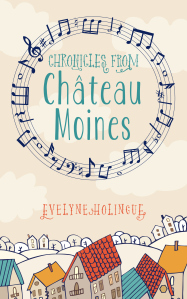
A wonderful fellow blogger had the smart idea of doing a post about books set in foreign lands. Evelyne Holingue is a Frenchwoman who now lives and writes in the US. She is the author of ‘Chronicles from Chateau Moines’, a young adult novel that deals with racial tensions in France. She was kind enough to include my humble junior novel ‘Mike the Spike’ – Australia is foreign to most of the world, after all! There are some great books in this list and well worth a read 🙂

The Whitley Award!

The Whitley Award!

It was a humbling experience and – to be honest – a slightly embarrassing one. On Friday night a great honour was bestowed upon me. In the grand foyer of the Australian Museum, I received the Whitley Award for Best Children’s Series. So why did I feel embarrassed?

It was something to do with the calibre of the other recipients. The Whitley Award is presented by the Royal Zoological Society of New South Wales – a scientific organisation dedicated to the study and conservation of native Australian fauna. The awards are a tribute to Gilbert Whitley, an eminent ichthyologist (a branch of zoology dealing with fish). Each year, awards are presented for publications that ‘contain a significant amount of information relating to the fauna of the Australasian region’.

Most of the recipients were scholars, experts in their chosen fields. Their books were comprehensive scientific guides, generally the result of years of dedicated work. Whereas my books were about – well, gross and weird animals doing gross and weird things. Farts and vomit featured rather more often than I’d care to remember. But as the hosts so graciously said, the books were fun and informative, and may well be inspiring the next generation of budding zoologists! What a wonderful thought 🙂

The Whitley Award 2015 - Best Children's Series

The Whitley Award 2015 – Best Children’s Series

The books were my Gross & Frightening facts series, a set of six published by Pascal Press earlier this year.

So yes, I felt a wee bit embarrassed getting up to make my speech … saying how much fun I had writing it (lots and lots!) … and rubbing shoulders with some of the country’s most brilliant zoologists. The pre-ceremony glass of wine helped somewhat.

Once I recovered from my bit, I was lucky enough to be able to listen to the interesting work of the experts, and to bask in some of their shared glory.


Due to tight publishing deadlines, I haven’t been blogging much lately. You’ve probably noticed … at least, I hope you have! I’ve missed it – nothing beats WordPress for writerly interaction! But now that my new series has been released, I think it’s about time I showed you what’s been keeping me so busy.

I’ve been channelling my inner child. More specifically, my inner warped geekling who loves weird animals almost as much as jokes about farts and bums. It’s resulted in this educational yet highly enjoyable series published by Pascal Press.

Gross & interesting facts about Aussie animals!

Full of gross and frightening facts about Aussie animals, the titles should give you a pretty good idea what the books are about – and why I had so much fun writing them!

  • That’s Sick
  • That’s Stinky
  • That’s Scary
  • That’s Lethal
  • That’s Bizarre
  • That’s Freaky

Here’s how the publisher describes them:

About this series: Fans of the highly successful That’s Gross! Weird & Disgusting Aussie Animals book will find much more to squirm at with squeamish delight in this new stomach-churning series written by Stella Tarakson. Featuring everything from offensive odours to prehistoric puke, these feral facts are not for the faint-hearted! Combining natural history, science and a sense of humour, these books are sure to keep kids entertained while they learn.

To celebrate, I’m offering a giveaway of one book from the series. All you need to do to enter is to write something in the comments section. Maybe tell me which stomach-churning title tickles your fancy the most. I’ll pick a name at random and announce the winner June 10.

As for what’s keeping me busy right now … I wish I could blab, but I can’t say too much about it just yet. I’m writing a book for Random House about something that’s fascinated me since childhood. I’m in a complete lather of excitement as I write, so you can probably guess it’s not another law book! I’ll say more when publication approaches, but for now, here’s a hint. BOO!


It’s a common complaint. It’s not what you know, but who you know. Or – when it comes to getting published – it’s not how well you write, but whether you have contacts in the industry. But is it true?

Alone in GeometryWhen I first started getting published, I had no contacts whatsoever. I sent an article to a magazine on spec, and they quickly made an offer. I tried another magazine, and they bit too. Then, armed with possibly too much confidence, I approached a book publisher. Just one! Happily, they accepted my proposal, and I went from being an aspiring writer to a published author with far more ease than I expected. Then – joy of joys – other publishers started approaching me and asking me to write for them. Horray! I was in!

But … this was non-fiction. I’m learning that getting novels published is far more difficult and takes much longer. I’m not sure why. It’s probably because there are so many people clammering to write stories, but I don’t really know.

What I do know, however, is that having contacts doesn’t help much. It hasn’t helped me, anyway. What tends to happen is you just get a politer ‘no’ than you would otherwise. Which isn’t surprising. Publishing is a business, after all, and the main goal is to make a profit. A publisher isn’t going to take on an author simply because someone recommends them.

It helps to know how publishers work. More than one person has to okay a proposal. The initial reader has to like it, or it ends there. Generally, the commissioning editor, marketing manager, and the boss all have to agree. Having someone arguing your case helps, but it’s certainly no guarantee.

There is one way that contacts might help, however. Many publishers don’t take unsolicited manuscripts, preferring only to deal with agents. A contact might get your manuscript through an otherwise closed door, but that might be as far as it goes.

In publishing, you make your own contacts. By submitting quality work and meeting deadlines, you get known. Last year I re-approached one of my former publishers and mentioned that I was at a loose end. A 6-book deal (non-fiction) followed within days. You can imagine how good that felt 🙂

So for me, the only contacts that mean anything are the ones that I have personally been able to cultivate. Having someone else speak highly of me hasn’t gotten me anywhere. How about you? Do you have any thoughts or experiences that you’d like to share?

Photo credit: tochis / Foter / CC BY-NC


It might be hard to believe, but magazine editors are human. That means they don’t like being begged, cajoled or patronised. They also don’t enjoy being bored. Sadly, many well-written articles don’t get a look in because of a poorly-worded pitch. It’s important to know how to approach an editor effectively, maximising your chance of getting published.

https://i0.wp.com/farm5.staticflickr.com/4057/4289385819_8ac54d6910.jpgPitch or complete article?

Generally it’s best to send a pitch first. Once the editor expresses an interest, send in your article. If they don’t respond to the pitch it means the idea itself is unsuitable for some reason. It doesn’t mean your article is crap – so you save yourself that agony at least!

Email or snail mail?

Assume email unless the publisher’s submission guidelines say otherwise. The guidelines might be printed in the magazine itself. In any case, you should be able to find them on the publisher’s website.

Addressing the pitch

This isn’t always obvious. If you peek inside the magazine cover, you may see a long list of confusing titles. Editor. Chief editor. Deputy editor. Assistant editor. Features editor etc, etc. Who do you send your pitch to? Check the submissions guidelines and make sure you send it to the right person, or risk it going astray.
Often the guidelines don’t provide a name, just a job title. It’s worth going the extra mile to learn the name of the actual person. The easiest way is to simply ring up and ask! And then comes the next question – do you address them by their first name or last? Dear or Hi? For first approaches, it’s probably best to play it safe and go formal. For later correspondence, follow the editor’s lead.

The all-important first paragraph

This is where the ‘editor’s don’t like being bored’ bit comes in. They read many pitches every day. You need to be able to grab their attention, just as surely as you need to grab their readers’ attention.
Don’t start off with, ‘Hi my name is blah and I’ve written an article.’ Yawn. Come up with a hook that makes the editor want to read more. It may well be the first paragraph of your actual article, or something like it. One of my workshop students sent a pitch beginning, ‘I watch porn for a living.’ As you can imagine, the editor pricked up her ears and the article was snapped up quickly!

What’s the article about?

Once you’ve got the editor’s attention, tell them a bit about your article. A bit. Keep this paragraph short and sweet. Editors are busy people. Just tell them enough so they get the idea. You’re not trying to provide a summary of the article.

IMG_0086[1]Why can you write it?

You’ve sold the article concept, now you’ve got to sell yourself. If you have any writing credentials, mention them. Have you had anything published elsewhere? Do you write as part of your job? Are you a keen blogger? Have you attended any writing courses? Include anything that shows you take your craft seriously.
If you haven’t written much before, don’t despair. Everyone has to start somewhere! Think about what else you can say to help sell yourself. I used my legal qualifications to help me sell my first article Conveyancing without going crazy. Are you able to write your article because of your job? Does it relate to your hobby, your passion, a matter you feel strongly about? Does your cultural background give you an insight into the issues? Does your article feature an interview with someone the readers will be interested in?

Concluding

Ask the editor if they would like to see your article. Make sure you thank them for their time and look forward to their response. Don’t be pushy or demanding … but don’t sound insecure either. Confidence and professionalism walks the thin line in between. If you’re not sure about your tone, leave the pitch for a day or so. Re-read it out loud, and check it doesn’t make you cringe! Good luck 🙂

Photo credit: Robbert van der Steeg / Foter / Creative Commons Attribution-ShareAlike 2.0 Generic (CC BY-SA 2.0)