You’ve probably heard the old dictum: ‘Write only what you know’. The unspoken ending for this line is ‘… or run the risk of looking like an idiot.’ Okay, then. Let’s run the risk!

When I first started writing fiction seriously, I took the quote to heart. I’m a lawyer, so I should write a legal thriller, right? I tried. It didn’t work for me. Although I enjoy reading them, writing one didn’t excite me the way it should. Needless to say, I abandoned the first draft midway, and started looking around for something else to work on. I’ve spent far too long messing about with things that I thought I should be writing, rather than asking myself what I really wanted to write.

Why the saying is kind of true

There is some merit to the dictum. It’s easier to write about something you are familiar with. You’ll have the confidence to go forward without always checking over your shoulder to make sure you haven’t made too many mistakes about the world your story inhabits.

And yes, factual errors do matter! Nothing makes a writer lose credibility faster than sloppy research. There will always be a reader who knows. When a barrister in an Australian or British novel strides dramatically around the courtroom while questioning a witness, I find myself getting edgy (they must stand behind the bar table). And then if s/he advises the client to ‘take the fifth’, I start wishing the writer would uphold their own right to silence! Anal, I know, but it doesn’t take much for readers to lose faith.

Don’t take it literally

Having said that, however, we shouldn’t take the saying too literally. If we did, the world of fiction would be a very dry and dull place. There would be no Harry Potter, no Darth Vader. No magic, no time travel, no vampires. Even stories set in the real world would be far more rigid and restrained. Sure, many writers have experienced incredible things that translate into breathtaking stories. Many more haven’t. But that doesn’t mean we can’t imagine them.

Let your imagination roam

Getting too caught up in ‘writing what you know’ stifles creativity. Start from the familiar, but don’t be afraid to branch out into unknown territory.  Always ask yourself ‘What if?’ Then, if you’re not sure of something, look it up or ask someone. Thanks to the internet, research today is easier than ever before, and you can always go back and correct any mistakes that crop up.

Write what you feel

I think what the saying really means is write about emotions that you know. Fear, anger, jealousy, elation. All part of the human condition. All familiar to your readers. It doesn’t matter if your story is set in your home town, a war zone or another planet. If you write about the sorts of feelings that readers can connect with, your story will ring true.

How about you?

Have you come across any examples of sloppy research that set your teeth on edge? Like a boy fastening his zipper in a story set in the 1700s? Or a Spartan soldier sipping a coffee before setting off to battle? Care to share them them in the comments section?

Photo credits: Darwin Bell / Foter.com / CC BY-NC      Kalexanderson / Foter.com / CC BY-NC-SA

Many people come to my magazine writing workshops with perfectly good articles they’ve written, distressed that they haven’t been able to get them published. They’re surprised when I suggest they may have gone about it the wrong way. Rather than writing an article and then trying to sell it, try to sell it before you write it!

In other words, get to know your market before you start writing. Pick a magazine that you would like to write for, then tailor your article to suit it.

Magazines are one of the easiest ways to get published

The magazine market

When I say ‘magazine’, by the way, I mean both print and electronic publications. Don’t overlook the flourishing ezine market! We can break the magazine/ezine market up into three broad segments.

Retail

These are the ones we buy in shops or by subscription, and the ones we’re most familiar with. They come in an astonishing array, from the mass market giants to the highly specialised niche publications. Generally speaking, the mass market is harder for new writers to crack. It’s often easier to start with a smaller circulation, special interest magazine, such as one on fishing, gardening, cars etc. If your interests match those of the readers’, you’re half way there.

Education

Some magazines are sold directly to schools, although members of the public can often buy them by subscription. The material is fun as well as educational and contains stories, activities and puzzles. Some are produced by private publishing companies, some by government departments (e.g the Department of Education here in New South Wales). If you have kids at school, ask them to check it out. Otherwise, find a friendly teacher or school librarian!

Custom / client

Many companies publish magazines for their customers and clients. Generally, they don’t charge for the magazine, rather it is a way of promoting their business. Some of the articles are on matters that might interest the readers. Some are ‘advertorials’ – a mix between an advertisement and an article. Although they read like standard articles, they feature the company’s product or business in some way. To write for them, contact the publisher, not the company itself. If you can get your foot in the door, you’re likely to get lots of ongoing work. When I first started writing full-time, I wrote hundreds of articles for this market. The money helped keep me going in the painfully long gaps between book royalty payments.

Finding the right magazine

There is a huge range of magazines you can write for.

The best magazine to write for is the one that you most like to read. Look for publications that match your interests, hobbies, or skills. Browse through bookstores and newsagents, look at libraries, and hop online.

Consider buying a writers’ market guide. Or, if you prefer, you can subscribe to one online. These provide detailed information on markets, including what the publishers are looking for. They also include writing tips and advice. Some even give you an idea of how much each magazine pays for articles.

Australians can check out the Australian Writers Marketplace produced by the Queensland Writers’ Centre and its online version: www.awmonline.com.au. The American-based Writers Market http://www.writersmarket.com/ is also a great resource. Now that we are so globally connected, don’t feel restricted by your location. Expand your reach.

What’s the next step?

You’ve found a magazine you’d like to write for – so now read it! Get a feel for the style of the magazine. Pay close attention to the length of the articles, the depth of information provided, and the tone in which they’re written. Do they use subheadings, bullet points and breakout boxes, or are the articles more flowing? If possible, grab some back issues of the magazine and look at those, too. Basically, get to know it as well as you can, before you even think about writing your own article!

Photo credit: prolix6x / Foter.com / CC BY-NC-ND hectorir / Foter.com / CC BY

It’s 5 pm. There’s a mess on the floor, the baby’s crying, and your two-year-old has just discovered the word ‘no’. You’re nowhere near your work target and dinner is still a distant notion. You think longingly about being a full-time parent. Or a full-time professional who can afford a nanny. Because surely it’s easier to be one thing, rather than constantly splitting yourself in two?

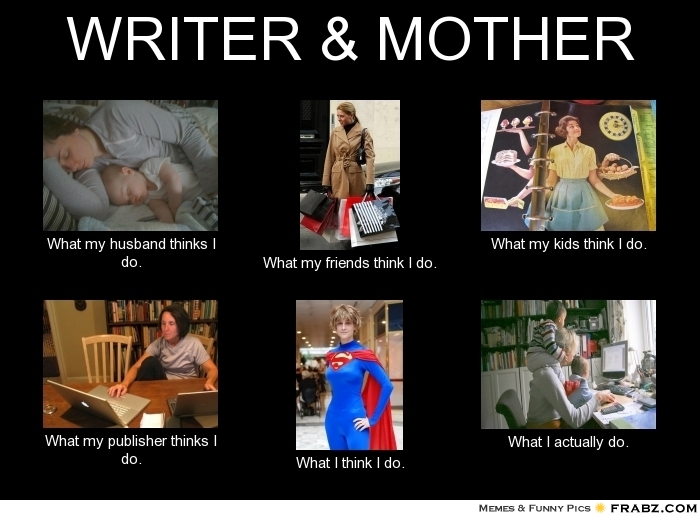
Many women – and men, for that matter – decide to leave the workforce and start writing when they have a baby. Picture the scene. A rosy-faced infant sleeps peacefully in a cot near your desk. You stop writing long enough to smile at your child and sip your cappuccino, before putting the final touches to your latest best seller. Life couldn’t be better.

frabz-WRITER--MOTHER-What-my-husband-thinks-I-do-What-my-friends-think-33cbea

Now, the reality. Bleary-eyed from lack of sleep, you stare frowning at the computer. A child sits on your lap, pulling your hair and babbling into your face. You’ve written a grand total of ten words, and haven’t even thought about the housework.

It sounds hard – and it is. But there’s nothing I’d rather do; I have time with my kids and can still do the work I love. Okay, maybe the writing progresses slower than it would otherwise, and maybe the house isn’t immaculate. But does it matter? For those of you starting on a similar journey, here are my survival tips for writing while raising children.

1. Don’t do it all at once

Trying to write while your kids want attention is a recipe for disaster. You end up getting frustrated and cross, and they haven’t really done anything wrong. They just want you. If you persist your kids suffer, your work suffers, and so do you. I know it’s hard, but try to split your day between writing and parenting. Work when they sleep or when they are otherwise safely occupied. Enjoy your kids now – the years will fly before you know it, and soon they’ll be pushing you out of their way!

2. Get used to surviving on little sleep

You probably figured this one out already. Until my youngest started school, I’d get up at 4 am and try to do a few hours before the kids woke up. When they napped, I wrote rather than rested. It worked, but it’s permanently screwed up my body clock. (6 am is now a leisurely lie-in for me.) You might work better at night. Find what works for you, make the commitment, and just do it.

3. Don’t take on too much

Not such an issue if you’re just starting to write, but if you’re already a professional, be careful not to overcommit with writing projects. Meetings deadlines is important. Beware of taking on more than you are capable of, or you risk looking bad to your publishers.

4. Prioritise – AKA stuff the housework

You can’t do everything. Trust me. Don’t even try. Of course the dull cleaning has to get done eventually, but all in good time. You might need to lower your standards a bit, and leave the grubby fingerprints on the wall for a few hours. Or days …

5. Finally, something that’s all about you!

When you have children, you tend to be defined by who you are in relation to someone else. Mother, daughter, wife, sister. (Or the male equivalent; let’s not be sexist.) But when you write, you are purely you. It’s about doing what you want for a change, expressing yourself, and living your dream. One day the kids will grow and go. That’s why it’s important not to give up writing, no matter how hard it feels. So what if it takes a long time to fulfil your dream? There’s no rush. Enjoy it :)

Photo credit: I created the meme using images from Foter.com

It’s the moment all writers dream about. The letter/email from a publisher saying they actually want to [dramatic drum roll] publish your novel! Ta dah! All writers have experienced the other kind of letter, too many times. The one that goes, ‘Thank you for your submission. Unfortunately, it does not suit our list. We wish you luck placing your story elsewhere. Yada yada yada. Yours sincerely.’

We get so used to them, we start to expect them. Just another rejection, no surprises there. So when the right kind of letter comes along, it’s hard to believe. You wonder whether you’re hallucinating. My wonderful email began with the standard thank you for your submission line. Then the golden words, ‘We are keen to publish this title in 2014.’

My new publisher!

My new publisher!

I had to read that sentence a few more times before it sank in. I wasn’t sure if it was real, or wishful thinking fuelled by caffeine overload. Then the next beautiful sentence, ‘Is it still available?’

It is such an incredible thrill. I’ve already had many non-fiction books published, and I’ve loved writing them all. But this is extra special. This is fiction, my first little novel, my dream come true. Ever since I was a kid … well, you know how it is!

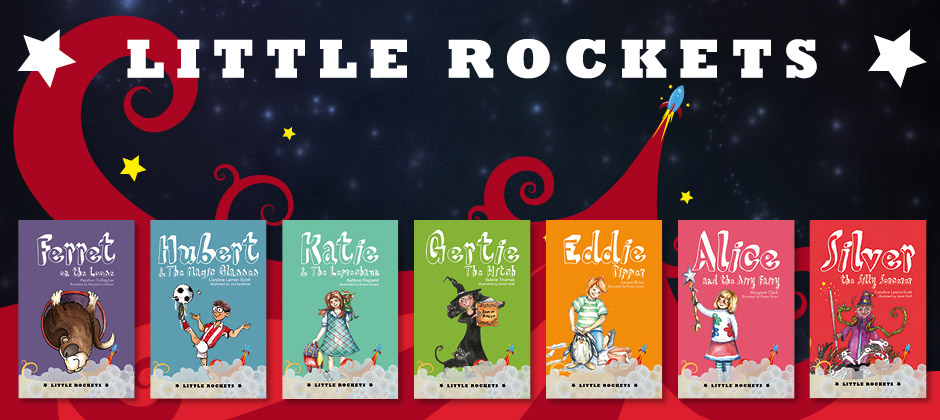
My junior novel is going to be published by New Frontier http://www.newfrontier.com.au/ as part of their Little Rockets series. The books are fast paced and humorous, for readers aged 7+ who are starting to read independently. They’re all stand-alone titles. Online teachers’ notes make them great for the classroom, as well as the home. These are the ones that have been published so far: http://littlerockets.com.au/ This time next year, my book will be among them! Horray! The story was fun to write, and I hope kids find it equally fun to read.

468-20130705133154-banner2

The journey so far

New Frontier announced it was accepting submissions for the Little Rockets series during March. I studied other books in the series and wrote one that I thought would fit. I sent off my story, also submitting it to the CYA competition, which I’ve blogged about previously: http://www.cyaconference.com/. Then three months later, my story wins first prize in the chapter book category, and I receive that awesome acceptance letter!

My editor asked me to trim the word count, which turned out to be much easier than I expected. A little snip here and there, and the pace has picked up – very important for this readership. An illustrator was chosen, and then came the contract.

What comes next?

It will take almost a year before the book hits the market. It sounds like a long time, but there is still a lot to do production-wise, and the book needs to be slotted in with the rest of the series. As each new milestone is reached, I’ll let you know in my blog. In the meantime, I’ll keep on writing :)

My head is still spinning from a social media workshop I recently attended. Such a steep learning curve! As writers, we all know we need a social platform, but establishing one that works takes time and effort. I’ve got a grip on blogging (I think!) but that’s only scratching the surface.

The Australian Society of Authors

The workshop was called Advanced Facebook and Twitter for Authors and Illustrators, held by the Australian Society of Authors: https://asauthors.org/. It was run by Steven Lewis, a social media expert: http://blog.taleist.com/.

Until recently, most of my work has been for the educational market. All I really needed was a website. Basically an electronic CV for publishers to check me out, and to give potential writing students an idea of my teaching approach. But now that I’m entering this shiny new world of fiction, it’s no longer enough. I need to explore facebook and twitter.

The importance of content

Steven stressed that writers need to ask themselves why people would want to follow them on social media. What can you say that your followers would find interesting or valuable? When and where should you say it? And while we’re at it, who are your followers, anyway? Think about who your audience is and what they want from you. Also think of your image, and how you want the world to see you.

Hub and spokes approach

A writer’s social media platform can be compared to a wheel. Your website/blog sits at the centre, or hub. The spokes are facebook, twitter, google +, pinterest, tumblr and so forth. Essentially, they work to drive visitors to your website, where the most detailed information about you can be found.

Website / blog

This takes the most work, in terms of time and commitment. Blogs require thought and care. Don’t just dash off a few careless words; give your followers something of value. Make it visually appealing by adding eye-catching photographs (that’s a pretty wheel, huh?) You can judge which posts are the most effective by the responses/views that you receive.

Facebook

This one wasn’t too hard for me. Like many people, I’ve had a personal facebook profile for years, so at least it’s familiar territory. Setting up an author’s page was easy enough. I’ve set it so my blog posts automatically get shared on my facebook page. I also share things I think followers will find interesting or useful. Information about writing competitions, workshops, upcoming events. Funny comic strips about reading, writing, things we can all relate to. It’s recommended that you put something up on facebook 3 to 5 times a week. Easy – just try and stop me!

Facebook is great because it’s interactive and informal. You can have a chat and a laugh with your fans. However, I didn’t know about ‘reach’. Just because people ‘like’ your facebook page, it doesn’t mean your posts will go to all of their feeds. If people don’t interact with your page regularly (like/comment/share), they eventually stop seeing it. Bummer.

Twitter

Twitter doesn’t have this problem. It seems to be the way to go – for now, at least. But I must admit I feel intimidated by having to tweet so regularly: 3 to 5 times a day! I really don’t know what to say – which surprises my family, who think I already talk too much. But … do you really want to know what I had for breakfast? (It was banana and yoghurt, in case you answered yes.)

From what I’ve gathered, twitter is not that hard. Again, it’s information sharing. I’ve set up a twitter account, but decided not to start tweeting just yet. I’ll lurk for a while, watching others. Not in a crazed stalker sort of way, mind you. More in a feeling-my-way-around sort of way. I’m following writers I admire, looking and learning. One day I’ll add my voice to the echoing abyss … Any advice you have would be much appreciated …

 But wait, there’s more!

Steven Lewis also described several tools that work with facebook and twitter to achieve better results. I think I need to play around with them a bit before I try to describe them to you. In the meantime, go along to one of his workshops if you get the chance. It made my head spin, but I learnt a great deal!

Photo credit: cindy47452 / Foter / CC BY-NC-SA, Sean MacEntee / Foter / CC BY, cobalt123 / Foter / CC BY-NC-SA

Do you belong to a writers’ group? My little group had a meeting last weekend, and as always it was enjoyable and stimulating – especially given that strong Greek coffee! It got me thinking about previous groups I had been in. Some good, some not so good. I’ve seen tall poppies ruthlessly cut down, but I’ve also seen self-doubting writers grow and flourish. Writers’ groups can be a great way to learn and grow, as long as you pick one that’s right for you.

Even better than tea and sympathy!

So how do you choose? Here are some of the considerations:

What do you want from the group?

You need to know what suits you before you start hunting around. Do you prefer large groups or small? Formal or informal? How regularly are you able to attend meetings? Some groups meet weekly, some monthly, some less frequently. Try to pick one that can fit into your schedule.

Keep in mind what you hope to gain from the meetings. Do you want your work examined and critiqued, or do you merely want to be with people who share your enthusiasm about writing? Either is fine, but be upfront about it, both with yourself and your fellow writers. Personally, I don’t want large groups of people looking at my work. Especially when it’s still in that crappy first-draft stage. I prefer to enjoy other writers’ company, where we motivate each other and celebrate our successes. If I want feedback on my writing I’ll ask a select few, and only when I’m ready.

Formal versus informal

Some writers’ groups are established entities, and you join by seeking them out and signing up. They might be held at libraries, writers’ centres, cafes, or clubs. They might (and should) have rules regulating the participants’ behaviour. Other groups are informal, generally created by a few friends with a common interest. The one I belong to is informal, and we take turns hosting lunch meetings in our homes. Good friends, good food, and good conversation. Works for me!

Helpful critique

Most people joining a group want feedback on their writing. This is where you have to be careful. I once joined a group where there was a considerable clashing of egos. Some of the critiques were brutally destructive, bordering on personal attacks. I left the group after wincing through a few sessions of witnessing people’s work ridiculed. Another group I joined was the polar opposite. Everyone praised each other fulsomely, but no criticism was given at all. Nice environment, but I didn’t learn much. I eventually drifted away.

The ideal is, of course, constructive criticism. Writers genuinely trying to help each other improve. How do you know if the group you are eyeing off does this? Ask a few of the existing members if you get the opportunity. The only way to really know, however, is to go along and see.

Goal setting

This is particularly important, even for my group’s laid-back, low-key sessions. At the end of each meeting we set our goals. What do we want to have done by the next time? How are we going to go about it? We give each other suggestions if we can. Then, at the start of the next meeting, we tell each other how we went. My current goal is to finish the first draft of a young adult novel I’m writing – eek! If we fail to meet our goals, we explain why. Knowing you have to account for yourself is motivating, to say the least!

The final measure

Joining a writers’ group can be a positive or negative experience. When it comes down to it, the final question is, ‘How does this group make me feel?’ If you leave a meeting happy and motivated, you know you’re in the right place. If you leave a better writer, make the most of it and keep going back.

How about you?

Do you have any stories to share about your experiences with writers’ groups? The good, the bad, the ugly – I’d like to hear from you.

Photo credit: joeszilagyi / Foter / CC BY-SA  angietorres / Foter / CC BY-NC-ND

I recently attended a writers’ conference in sunny Brisbane. First up was a panel of editors explaining what they like – and what they don’t like – to see when authors submit stories. Their tips were fantastic, so I scribbled them down as fast as I could.

cya logo

The CYA Conference, 2013

On the panel were David Reiter, publisher at IP Kidz www.ipoz.biz/, Claire Craig, publisher at Pan Macmillan http://www.panmacmillan.com.au/, and agent Alex Adsett http://alexadsett.com.au/.

Down-to-earth and approachable, they discussed what they want to see in a story. They also explained the dos and don’ts of submitting work to publishers and agents.

Here are some of the tips – straight from the source!

1. Don’t chase trends

Many writers try to hurl themselves onto the latest bandwagon. Sure enough, we’ve seen waves of wizard books and swarms of vampire novels. But is searching for the latest greatest thing a good strategy? Although it sometimes works, it is risky. Fashions change, and the market might be saturated by the time you get there.

2. Write what you love

This ties in with the first tip. Rather than trying to follow the latest trend, write what matters to you. The subject matter should interest and excite you. If you don’t love your own story, you can’t expect anyone else to!

3. Jump straight into the story

Don’t fill your first few pages with setting up the backstory. Leap into the fray, then filter in any necessary backstory later on. All three panellists said they only need to read a few pages to know if they like a story – gulp! There’s certainly no room to waffle.

4. Don’t obsess over word counts

‘The story will be as long as it needs to be.’ At least when you first write it. If a publisher likes your story and thinks the length needs adjusting, they will let you know.

5. Don’t do illustrations

This advice was for writers of picture books. Unless you are a professional-level illustrator, don’t submit pictures. Publishers prefer to team you up with an illustrator they’ve selected. Some publishers want suggestions for illustrations; some don’t even want you to do this. If in doubt, check their submission guidelines.

6. Polish it until it shines

Learn how to edit your own writing, and do the best job you can. Don’t submit something that you know needs work. Even though a publisher is going to ask for changes, give them the best you’ve got.

7. Check their guidelines

Look at the publisher’s website for submission guidelines. For example, they might specify a particular font style and size, and they might ask for the manuscript to be double-spaced. They might want electronic submissions or hard copy. They might only take submissions at a certain time of year, or on a certain day of the week. Whatever they say, be sure to take notice!

8. Send a proposal, not the whole story

Most publishers don’t want to see the whole novel. They might ask for a synopsis and some sample chapters. If they like what they see, they’ll ask for more. Check their guidelines and give them what they ask for.

9. Compare your work to other titles

This helps publishers get an idea of where your work fits in the market. If they have already published books similar to yours, let them know. This shows you’ve done your research and are familiar with their list.

10. Regarding multiple submissions

As a general rule, publishers don’t like writers sending their manuscripts off to several places at once. Many writers do this, however. Publishers prefer us to be upfront about it. If someone then takes you on, you should immediately notify the others and withdraw. Hmm, what a lovely thought!

Photo credit: paloetic / Foter / CC BY-NC

Like all good things in life, the writers’ conference started with the smell of coffee. I felt excited, and a bit nervous, walking into the CYA Conference rooms at Southbank, Brisbane. The heady smells and the sound of excited chatter were the perfect greeting. I didn’t know anyone, but I knew I’d be surrounded by people who held the same passion as me – to write for children and young adults.

That’s what CYA stands for, by the way, children and young adults. Participants came from all over the country and beyond to celebrate books and improve their craft. Check out the link: http://www.cyaconference.com/ The people I met were fantastic – generous with their knowledge and enthusiasm, genuinely eager to support each other.

First prize, junior novel category. Yay!

First prize, junior novel category. Yay!

First prize :)

The conference runs a highly-regarded writing competition, with excellent feedback sheets. A few years ago I entered a story that placed third in the chapter books (junior novels) category. This year I entered a different story. I’m delighted to say I won first prize! It was such a thrill and a great confidence boost. I received many congratulatory hugs from the wonderful writers I met. Lucky, otherwise I think I would have floated away …

Master classes, workshops and presentations

The only problem I faced at the conference was picking which classes to attend. The range was comprehensive: from picture books, storyboarding, character creation, software tools, pitching a manuscript, and using social media. Participants were also able to submit their stories for one-on-one sessions with various editors and agents: a great way to by-pass the slush pile.

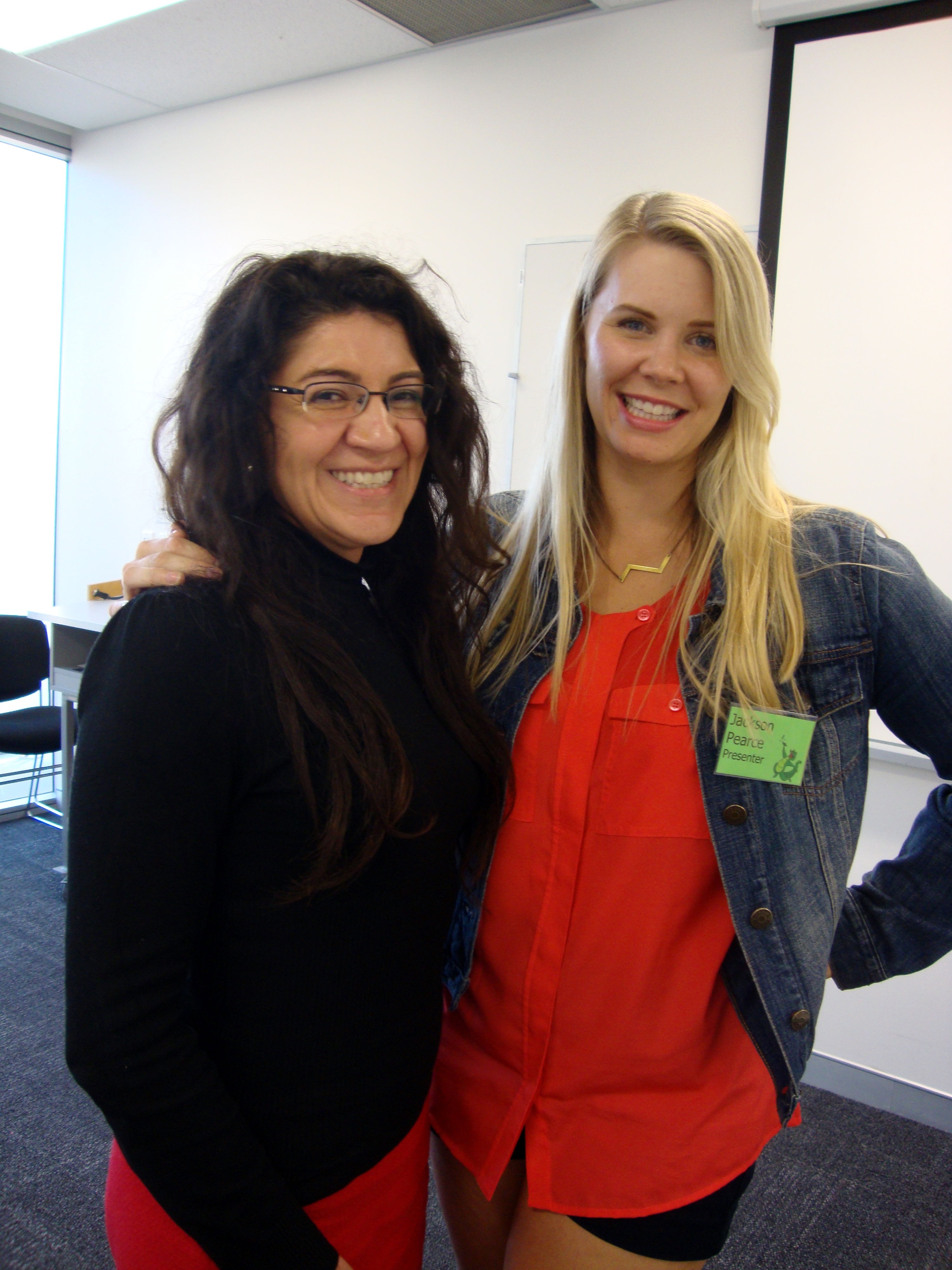
Me with Jackson Pearce!

Me with Jackson Pearce!

I attended Brian Falkner’s extended master class on writing for young adults. He showed us some lessons writers can learn from the Hunger Games trilogy: http://www.brianfalkner.co.nz/. Jackson Pearce’s social media master class provided us with valuable information on this fast-moving area: http://jackson-pearce.com/.

 CYA success stories

The day closed with a source of inspiration. A presentation by previous winners, now published authors, who link their success in some way to the CYA conference or competition. There are many of them – have a look: http://www.cyaconference.com/cya-success-wall/.

Enthusiasm and confidence radiated out of them, infecting us all. The message was clear – if I can do it, you can too! I was buzzing all the way home. I could have flown to Sydney without the aeroplane. Days later, I’m still buzzing. Daydreaming about joining the CYA success story panel soon!

Yippee! Some wonderful news I’ve just received gave me the idea for this blog. My story made the shortlist for a prestigious writing contest … and … no, hang on, excuse me while I do a happy dance. [Leaves desk, prances around room in unseemly manner, returns exhausted.] Ah, that’s better. Anyway, as I was saying, it made me think about the reasons why aspiring writers should enter competitions. Here they are – along with an important warning that my legal training compels me to include!

1 It helps you hone your skills

Writing is all about practice. The more you write, the better you get. When you write for a contest, rather than simply for your own pleasure, you have a clear goal and a deadline. A great way to stay focused and keep the procrastination bug at bay.

2 It makes you write to a brief

Most writing contests have guidelines. The story might need to be on a certain topic, or about a given stimulus. Almost certainly there will be a restriction as to its length. Whatever the requirement, writing to fit the guidelines is good practice for the day when a publisher asks you to write to a brief. Yes, it can happen!

3 For the feedback

The more desirable competitions provide detailed feedback. Check this out before you enter, because this alone makes it worth the entry fee. The judges might be editors or authors, agents or previous winners. They might be academics or teachers. Even if you don’t win, a judge’s well thought out feedback can help you rework your story into something saleable.

4 For the prize!

It might be money. Maybe a little, maybe a lot. It might be a copy of a book that your story will be published in. It might simply be a little certificate saying you have won, which is also fine. But it might be something else entirely, and this is where your scam sensors need to be on the alert.

Some competitions offer ‘winners’ a copy of the book containing their story, but only if they pay some ridiculously high price. It’s normal to pay a (reasonable) fee to enter the competition, but be wary if you have to pay for your prize! Similarly, watch out for contests run by agencies that promise to represent you, but only if you fork over large sums. Reputable agents will take a percentage of your earnings for deals they negotiate on your behalf – they won’t ask you to pay an upfront fee.

5 For the exposure

Regardless of the prize, a contest win is something you can use to promote yourself as a writer. Brag on social media and add it to your CV. It gets you noticed. Some competitions are more highly regarded than others, naturally, but any win in a genuine contest is worth crowing about.

6 For the networking opportunities

The winners may be announced at an award ceremony. A good way to meet other writers, the sponsors of the competition, and the judges. Go along, slap on your best smile, and take your business cards.

7 For the confidence

This is probably the most important benefit, even if you’re not consciously aware of it. The path to publication is long and slow, and a few competition wins along the way give you an incredible boost. Even if you don’t win, you can chart your progress over time by tracking your contest feedback scores and comments – tangible proof that your work is improving. It’ll give you the motivation to keep going, on what can otherwise be a journey fraught by self-doubt. Which reminds me – time for another happy dance! The award ceremony is on Saturday … horray … don’t know if I can keep up all this dancing until then …

Share your experiences

Have you ever entered a writing competition? Was it a positive experience for you? Did you win a prize and if so, what was it? Feel free to brag – or moan! – in the comments section. I’d love to hear from you.

Photo credit: cherylsmith999 / Foter.com / CC BY-NC-SA The National Academy of Sciences / Foter.com / CC BY-NC-SA

One sign of weak, unclear writing is the overuse of the passive voice. If you want your work to radiate authority, be active and root out those passive sentences! Active sentences are clear, direct and strong. Passive sentences are indirect and carry far less impact. I’ll explain the difference in a moment, but first here’s an example of what I’m talking about. Which sentence do you think sounds better?

The guest was introduced by the teacher.The Great Escape OR
The teacher introduced the guest.

I’m hoping you said the second sounds better! How about these?

The concert will be attended by me tonight. OR
I will attend the concert tonight.

I think that one’s obvious. In each case, the first sentence is passive, the second is active.

What’s in a sentence?

It helps to understand some basic grammar. Sentences are composed of verbs, subjects and objects.

Verbs are action words – leap, think, drop, cry, etc.
The subject is the person or thing that is performing the action.
The object is the person or thing that is being acted upon.
Let’s take a simple sentence:
Sarah slammed on the brakes.
The subject is ‘Sarah’, the verb is ‘slammed’, and the object is ‘the brakes’.

Active versus passive sentences

‘Sarah slammed on the brakes’ is an active sentence. This is because the sentence focuses on the subject, Sarah, and what she is doing.

 In a passive sentence, the focus is on the object – that is, the thing being acted on. Our sentence would read: ‘The brakes were slammed by Sarah’. Doesn’t sound right, does it? You might want to fiddle around with the verb a bit … ‘The brakes were stepped on by Sarah’, ‘The brakes were activated by Sarah’ … but no. Yuck. Much better to stick to the active voice.

What about formal writing?

People tend to use the passive voice when writing formal documents, such as business documents and academic essays. They think it will give their writing an air of authority, but often it does the reverse. It can sound like the writer’s trying too hard, and not really sure of themselves. I’m not saying there is no place for passive sentences. Just keep in mind that if you overuse them, you run the risk of making your writing sound stilted. Or worse, unclear.

The bill was passed by parliament. OR
Parliament passed the bill.

Both sentences are formal. The second is more direct and easier to understand. This is particularly important in documents that are, by necessity, long and complex.

When are passive sentences appropriate?

Sometimes you are deliberately trying to focus attention on the object. For instance:
The beggar was given a coin by a passer-by.
You could quite easily have written this as an active sentence (A passer-by gave the beggar a coin), but, for the purposes of your story, you wanted to give more importance to the beggar. It’s a matter of emphasis, and your judgment call as a writer.

Another example of when you might want to use passive sentences is when the identity of the subject is unknown. For example, where a burglary has taken place but we don’t know who did it.
The bank was robbed.
Passive, yes, but still to the point and snappy. It sounds better than, ‘An unknown person robbed the bank.’
Or maybe you need to be tactful in a business document and not identify who was at fault.
Mistakes were made.
This might be better than finger pointing and allocating blame. It all depends on what you are trying to achieve with your writing.

Switching from passive to active

So how can you switch from the passive to the active voice? First, you have to be able to identify when you are in fact using passive sentences. Look at your writing. If you used ‘was’ and ‘by’ in the same sentence, chances are it is passive.
The ball was caught by Jim.
In most passive sentences, the object comes first. To make this sentence active, switch the order of the object and subject, putting the subject first.
Jim caught the ball.
Simple!

So remember, I’m not saying avoid passive sentences at all cost. However, if you use passive sentences, be aware that you are doing so. Think about the goal of the piece and what you are trying to achieve. If there’s no good reason to use the passive voice, try re-working it as an active sentence and see if it reads better!

Photo credit: J. Star / Foter.com / CC BY-NC-SA  Fabrice ROSE / Foter.com / CC BY-NC-ND