After years of heavy sighs and longing looks, I’ve finally managed to sit on a writers’ success panel. The wonderful CYA Conference people invited me to present a talk to other writers about how my experience with CYA helped lead to my publishing success.
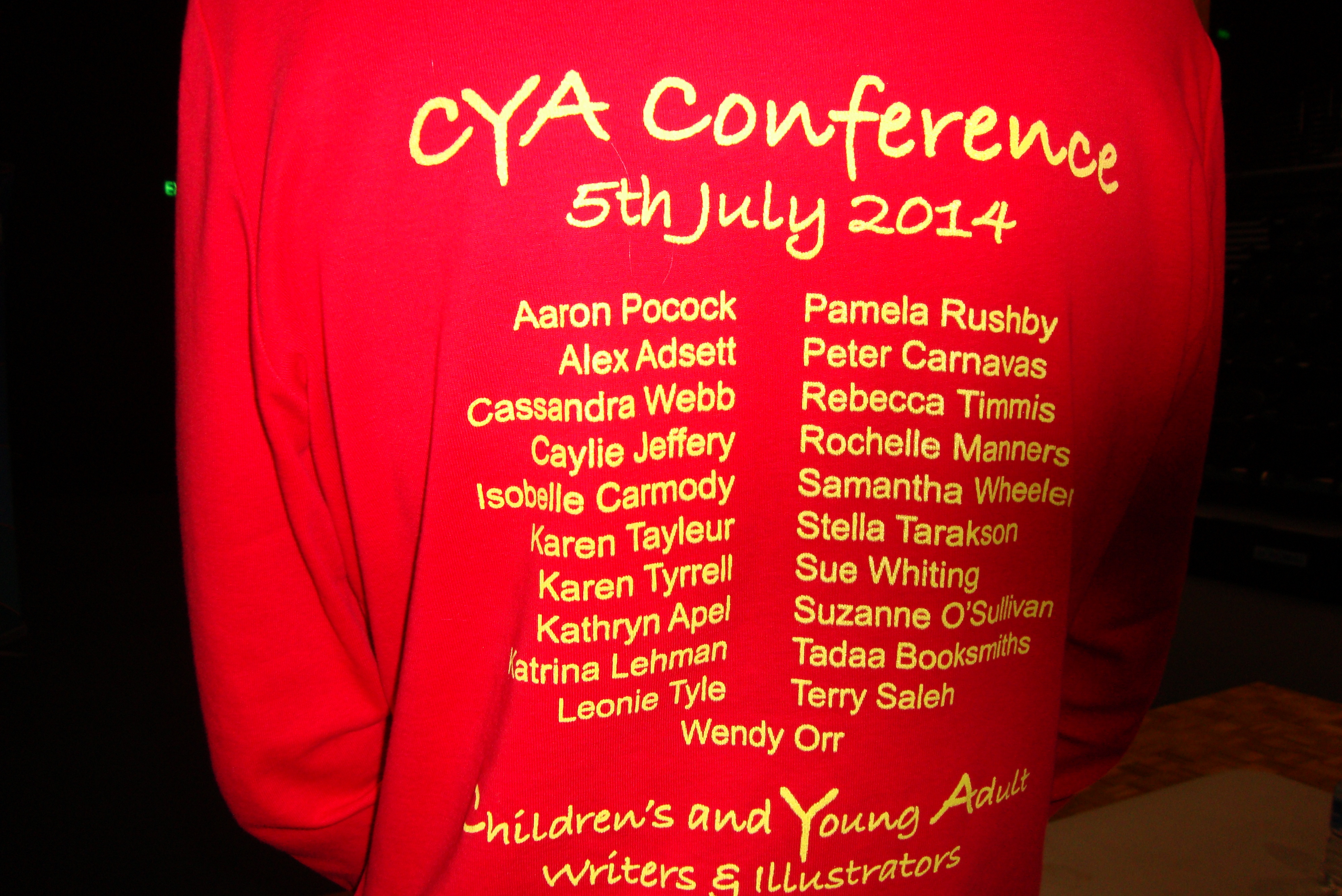
tshirt

I was delighted to take part – it was a dream come true! But it also made me think about what it actually means to be a success. I was listening to my fellow panel members. All with different stories and different paths, and all undeniably successful.

It made me ask the ultimate question – do I consider myself a success? The answer was typically twisted. Yes and no. Yes, because I reached my goal. And no, because now I have even more goals to fulfill. I don’t want this to be my only kids’ novel. I’ve had a taste of fiction writing and I want some more.

I found it interesting to hear Wendy Orr, author of Nim’s Island and fellow conference presenter, talk about her own experiences. She said that with each success, she found holding back her inner critic increasingly difficult. It sounds odd, but I totally get it. Maybe there’s never a stage when writers think “this is it, I’ve succeeded in everything I’ve ever wanted to do”. The more we do, the more we want to do and the better we write, the better we want to write.
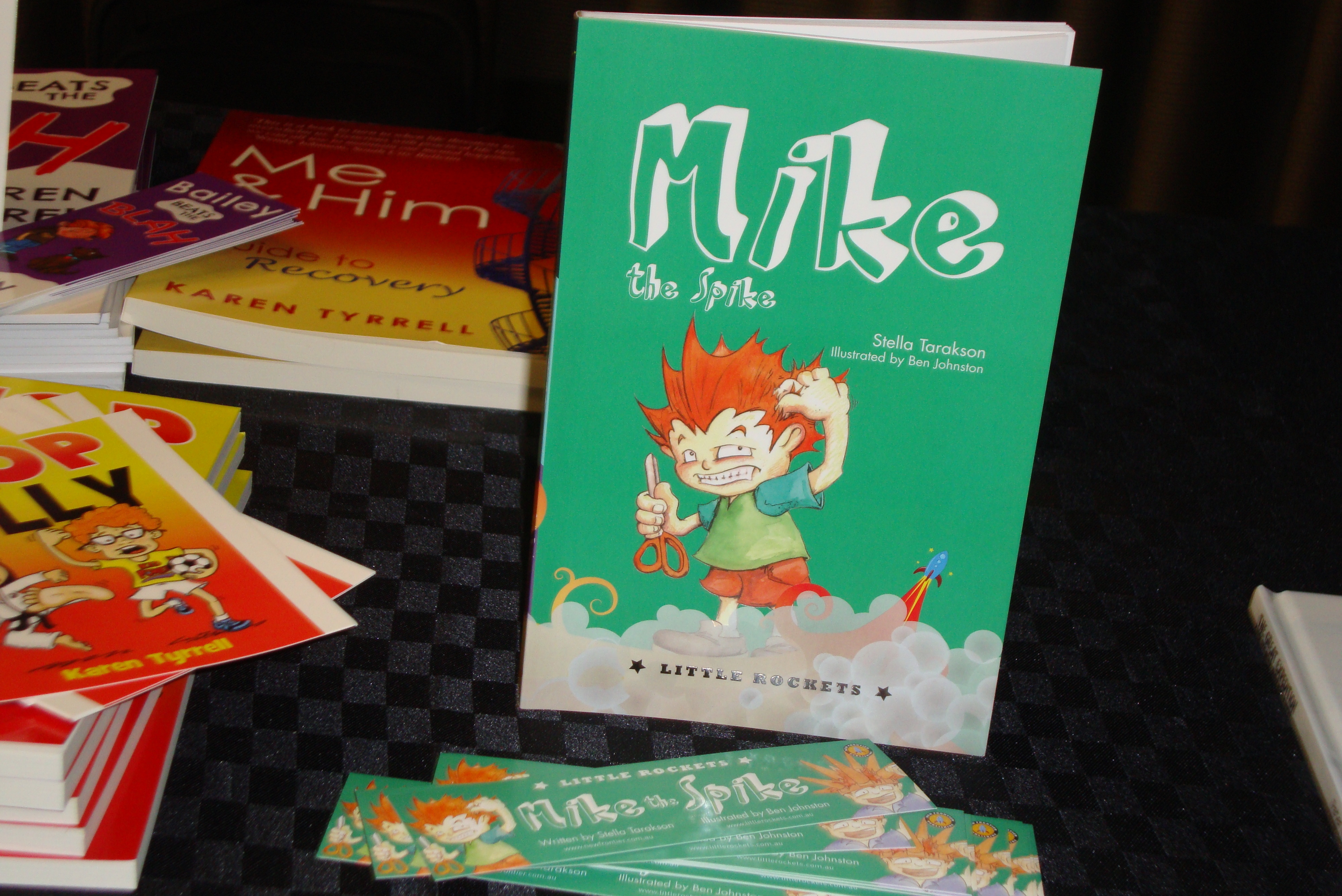
at conference

Mike the Spike on sale at the CYA Conference

But what if this is it for me? What if Mike the Spike is a one-off? Does it negate the success I’ve had so far? Of course it doesn’t, but before the conference I knew I’d consider myself a failure if I couldn’t follow on. I guess that’s what keeps driving me. Maybe other writers feel the same, I’m curious to know!

But the conference got me thinking. If you’re happy with what you’re doing, you’re a success. If you keep pursuing your goals, you’re a success. The only time I as a writer I can say I failed is if I ever give up. If I let that pesky inner critic get the better of me. And thanks to the support I encountered at the conference, I know I’m not going to let that happen.


mike the spikeThe first glimpse of a book’s front cover is thrilling for authors. Suddenly it all starts to feel real. I’m happy I can now share my excitement with you!

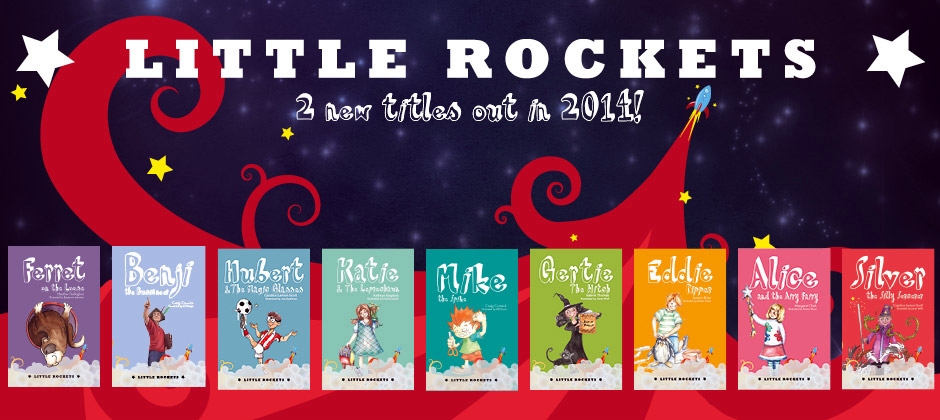
Mike the Spike will soon be released by New Frontier Publishing as part of their Little Rockets series. You can download free teachers’ notes and classroom activities from the publisher’s website.

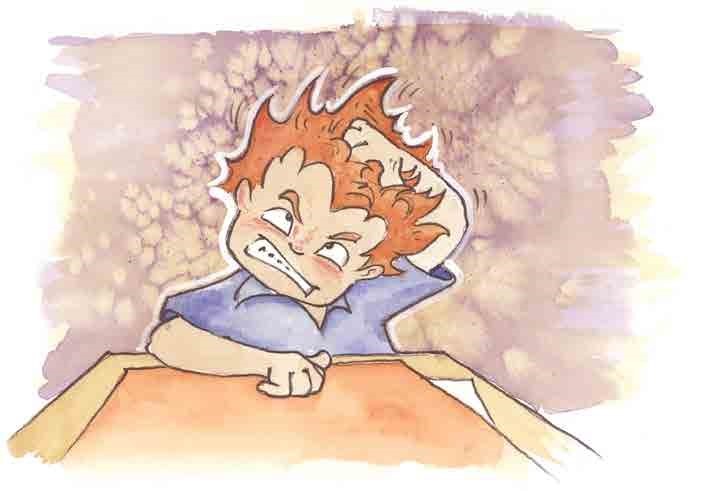
Mike the Spike revolves around a boy trying to get rid of his head lice before anyone finds out. But it’s also about trust and self-reliance – important issues for children aged 7+, who are starting to explore their role in the family and their wider community.

Who can I trust with my problem? Can I deal with it myself? When should I ask for help? And can a cool hat really be the solution to life’s toughest ordeals?

How many times have I attended writers’ conferences, watching authors share their wisdom and wishing I were among them? Don’t worry, it’s a rhetorical question. Even I don’t know the answer … suffice it to say, many. So when I discovered I’d finally be up there, on a panel, rubbing shoulders with other children and young adult’s writers, it was a dream come true.

images

The 2014 CYA Conference Brisbane

The wonderful CYA Conference people have invited me to join the next CYA Success Story Panel. I’ll be alongside writers Kathryn Apel, Samantha Wheeler, Karen Tyrrell, Caylie Jeffery and Cassandra Webb. Here are the presenters and yes, I am one of them! I’ll let you in on a secret – I check this page from time to time, to make sure it’s real and I haven’t been hallucinating :)

The conference is an annual event, and this year’s date is July 5. Less than two weeks away! There’ll be workshops and masterclasses again, and the program looks great.

New Frontier publisher of Mike the Spike

New Frontier
publisher of Mike the Spike

I’ve blogged about last year’s conference previously, when I received first prize for my story Mike the Spike. Now the book’s about to be published by New Frontier as part of their Little Rockets series. The official release isn’t until August, but my diligent publishers have managed to secure some advance copies that will be available for purchase at the conference. Maybe I’ll be even be asked to sign a few! I can feel a swoon coming on … hang on while I grab another coffee …

Right. I’m okay now. I’m delighted for this chance to thank CYA for their role in my success, and to be able to attend this year’s conference. Can’t wait, and I hope to CYA there!

Many authors are comfortable writing about their characters, but cringe when it comes to writing about themselves. Yet it must be done! Part of selling your book is selling yourself … but this doesn’t mean making readers doze over your life history.

Keep in mind that as an author you’ll need more than one bio. You’ll need an extended one for your website (say about 200 words) that you can also use for book proposals and media kits. You’ll need a shorter one that will appear on the book/story itself and for shorter marketing material. Depending on the situation, this may be 50 to 100 words. Here are some tips to help you create snappy bios that will connect with your audience.

https://farm9.staticflickr.com/8305/7987553456_48bd02f63f.jpg

Use the third person

It might feel odd referring to yourself by your name, but this is usually the norm. Probably because it sounds less boastful, as if someone else is blowing your horn for you. But we know better, don’t we?

Bio not biography

Don’t tell your entire life story. Ask whether it really matters when and where you were born, where you went to school, what your parents did. If it’s relevant to the story, then sure. Go for it. Otherwise, it might just be taking up valuable space. Start with the good stuff, the interesting stuff, the relevant stuff. Leave the rest until you write your autobiography!

Mention relevant interests and experiences

If you’ve lived through something that inspired you to write the book, pointing this out is a good way to connect with your readers. It gives you credibility and an interest in common. Highlight your inspiration, your passions, your reasons for writing. If it’s clear you care about your book, the readers will be more likely to care too!

Previous awards or publications?

It might be worth listing some of your literary achievements. Have you won awards for your writing, or for something your writing relates to? Have you had other books, poems or short stories published? You don’t need a long exhaustive list – this isn’t a CV – but give enough to establish your credentials.

Mention relevant qualifications

Note the word ‘relevant’. If your degree, job, or other qualification relates to the book, it’s worth mentioning. Again, it gives you credibility. I flung my degrees around when promoting my law books. There’s not much point referring to them with my kids’ fiction, however. Unless I’m writing about a girl who sets herself up as an amateur lawyer and takes on cases for her schoolmates … actually, that’s not a bad idea!

Suit the situation

This is the single most important consideration; it’s what everything else boils down to. It’s most certainly not a case of ‘one bio fits all’. My junior novel about a boy with nits is being released soon. The bio contains quips about how I’ve always been ‘itching to write fiction’. It would be most bizarre if I wrote that on my legal studies textbooks! Give serious thought to each and every bio you write, and tailor it to the situation. Start each one from scratch, as it were …

Photo credit: Cali4beach / Foter / Creative Commons Attribution 2.0 Generic (CC BY 2.0)


Gotta love fellow writers! Author and blogger, Evelyne Holingue, has tagged me on the ‘Meet My Main Character Blog Tour’. Thanks, Eveylne, I’m honoured to take part. Evelyne is a Frenchwoman now living in the United States. She writes in both languages and is a very talented lady. She’s the author of Trapped in Paris, a thrilling young adult novel set on a background of loss. You can find out more about Evelyne and her work here. 

This blog tour helps us learn more about each writer’s book, and in particular that all-important main character. Seven questions have been set. Evelyne has expertly tackled them on her blog, and now it’s my turn!

Mike the Spike

Mike the Spike

1 What is the name of your main character? Is he fictional or a historic person?

Mike is fictional, but typical of many 9-year-old boys. He likes to think of himself as ‘Mike the Spike’, as he has tall spikey hair that he’s terribly proud of. Mike’s quite small but believes his spikes make him look tall and very grown up.

2. When and where is the story set?

It’s set in the modern day. Most of the action revolves around school and the average suburban home.

3. What should we know about him?

Mike needs the approval and admiration of his peers. He’s a fiercely independent boy who likes to solve problems by himself, without adult help. This tends to get him deeper and deeper into trouble, with amusing consequences.

4. What is the main conflict? What messes up his life?

Mike’s greatest source of pride – his hair – comes under threat. To his horror, he discovers he has nits. Mike is convinced his head will be shaved. How will he cope with the shame? He decides to get rid of them quickly, all by himself, before anyone finds out. But as anyone who’s ever had nits knows … it isn’t easy.

5. What is his personal goal?

Mike has two goals. The first, of course, is to get rid of his nits. His other goal is to make a great non-spike-squashing hat for the upcoming hat parade. He’s never won a prize before and longs to win something, just this once. But how can he, when he can’t stop scratching?

6. Is there a working title for this novel, and can we read more about it?

The junior novel is called Mike the Spike and it suits readers aged 7 +. Although it’s ostensibly about nits, it’s also about trust, self-reliance, and where you can turn when you need help.

New Frontier Publishing Little Rockets Series

New Frontier Publishing
Little Rockets Series 

7. When can we expect the book to be published?

It’s being released in August! My publisher is New Frontier, and the book is being published as part of their Little Rockets series. This is a fast-paced series full of memorable characters, and I’m thrilled that Mike the Spike is going to join them.

And now it’s my turn to pass on the favour!

I’d like to invite Marcia Meara of the excellent Bookin’ It blog to take part in this blog tour. Marcia’s written a couple of books that I’d love to know more about.

I’ve previously interviewed Pamela Cook, a rural fiction writer. She’s already had two novels published, is well into her third, and writes the inspirational Flying Pony blog.

Dimity Powell  is a fellow kids’ book author. Check out her blog  Dimswritestuff.

Karren Tyrell is a mental health advocate. She writes books that help children deal with bullying. She’ll be joining me on the CYA Conference success panel next month, which I’ll blog about soon :)

Over to you, ladies …


It’s been a long time coming, but the release of my first junior novel is finally drawing near. Mike the Spike is being launched in August :)

prelimThere have been several highlights of the journey already. The first – and most crucial – was signing the contract with New Frontier Publishing. Promises of publication are all terribly exciting, but as a lawyer I know only too well that nothing’s definite until the contract’s done and dusted. Actually … not even then … but that’ll be the subject of another blog post!

Getting to see the manuscript laid out in book pages was the next marvellous milestone. For the first time, I saw my story as an actual product. It suddenly became something that other people will buy and sell, not just something that’s been living inside my head. It felt odd, like I was reading someone else’s book.

prelim2Large blank squares appeared throughout – spaces where the pictures would go. There were no pictures yet, just a few brief sentences to guide the illustrator. I couldn’t wait to see the drawings.

My editor passed on some preliminary sketches to keep me happy. I guess they’re used to impatient authors!

All the pictures will be in full colour. My illustrator is the talented Ben Johnston, who is also an architect. It’s so amazing to see my characters brought to life visually. It’s something I could never do myself. I’ve dabbled with drawing … and playing guitar … all I can say is, thank God I can write!

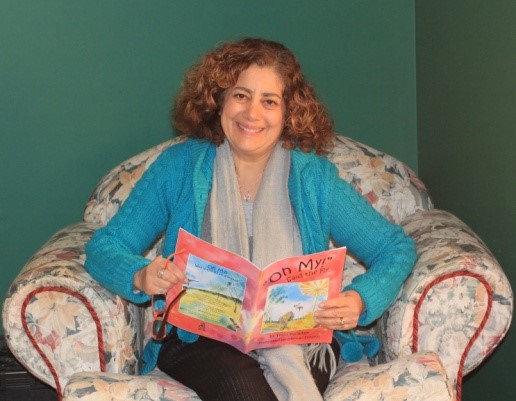
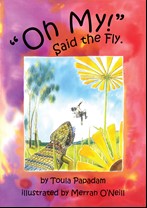
You come across all sorts of interesting things at school fetes: food, handicrafts, books, even writers! Toula Papadam used the opportunity to promote her picture book … and I used the opportunity to hustle an interview. I’m grateful to her for agreeing to share the highs and lows of her self-publishing journey.

Toula Papadam

Toula Papadam

1. Can you tell us a bit about your picture book ‘Oh My’ Said the Fly!
The story is about a bee who just wants to do his work among the flowers, but keeps being disturbed by predators, which the fly (and others) warn him about.

2. How long were you trying to find a publisher?
Many years. I’ve written many picture book texts, all of which were rejected by several publishers. I become disheartened and gave up. A good friend of mine, teacher librarian Jenny Harpley, convinced me to persevere. She loves my writing and convinced me these stories should not be wasted. Finally, I decided if no one wanted my work, I would publish my stories myself! The whole process from conception to publication of my book took 15 years.

3. How did you go about self-publishing your book?
First I had to find an illustrator. I was horrified to discover that professional illustrators charge between $10 000 and $20 000 plus royalties! I approached an artistic colleague of mine, Merran O’Neill, and asked if she would be interested. She jumped at the idea.

The next step was to find a book designer to put the book together and prepare it for the printers. Very expensive! So I approached my son, Arthur Papadam, who dabbles in graphic design. Luckily, he was up for the challenge! We took the artwork to be professionally scanned, then Arthur got to work and put the text to the illustrations, designing every page as well as the front and back covers.

I went to a local printer, who were very helpful in guiding me through what had to be done before printing commenced. I had to get an ISBN plus a barcode. Then I had to look up oh my said the flyThe National Library of Australia to obtain a CIP (Cataloguing in Publication). The book’s existence is now acknowledged. At this site, I also obtained the copyright for the story and the illustrations. All this information had to be included on the page containing the publishing information. (NB: A professional book designer can do all this for you and prepare your book ready to submit to the printer, if you are willing to pay for this service.)

The next step was to register my own publishing business. I had to choose a name for my publishing company, then look up the Dept of Fair Trading to check it wasn’t taken. Once the registration was done, I had to apply for an ABN. Then I had to apply for lending rights (ELR: Educational Lending Rights and PLR: Public Lending Rights).

After this complicated and costly process, the book was ready for the printer! We chose to have the book fully produced and printed in Australia, even though most authors send it overseas where it can be done more cheaply. Ligare Book Printers in Riverwood were very professional, we were very pleased with the final product.

But there’s still more! We had to consider the ‘Legal Deposit System’, which required us to send a copy of the book to each of two libraries: The National Library of Australia and our State Library. The complicated process of self-publishing my book was finally complete.

4. What advice would you give to someone who’s considering self-publishing?
I would say to consider this very carefully, it is not an easy thing to do. It’s very time consuming and costly. You need to consider how you plan to sell your book. I was horrified to learn that large book stores are not interested in putting self-published books on their shelves and public libraries don’t support self-published authors either, not even your own local library! Be prepared to take time off work to sell the book yourself, you will have to work hard for every copy you sell. If all you want is to get your book out there, then okay. But if you want to do this for profit, then I would advise not to do it at all.

5. Where can people buy a copy of your book?
You can contact me by email: toulapapadam@hotmail.com

6. Is there anything else you’d like readers to know about you?
Yes! I am a casual school teacher who takes time out from teaching to promote the book. I am available for guest appearances and signings at schools, bookshops, charity functions and special events. You can find out more about me at: https://www.facebook.com/ToulaPapadam


Mothers’ Day was a beautiful autumn day in Sydney, filled with smiling children, sunshine and chocolate. Who could ask for more?

giftsWell, presents are nice too. Especially the ones made by our children (although shop bought stuff is good too!) When my daughter Connie was little, she used to make me dozens of presents. Cards, collages, strings of beads, craft figures. She would solemnly hand them over one by one. It would take at least half an hour. In the meantime, my son would be eating my chocolates. He shows his love in a different way!

Connie's storyAs my daughter grew older, the quantity diminished, but the quality skyrocketed. Her drawings grew more sophisticated. She started to write stories. Her abilities amazed me. Here’s a page out of one of her little hand-written illustrated novels.

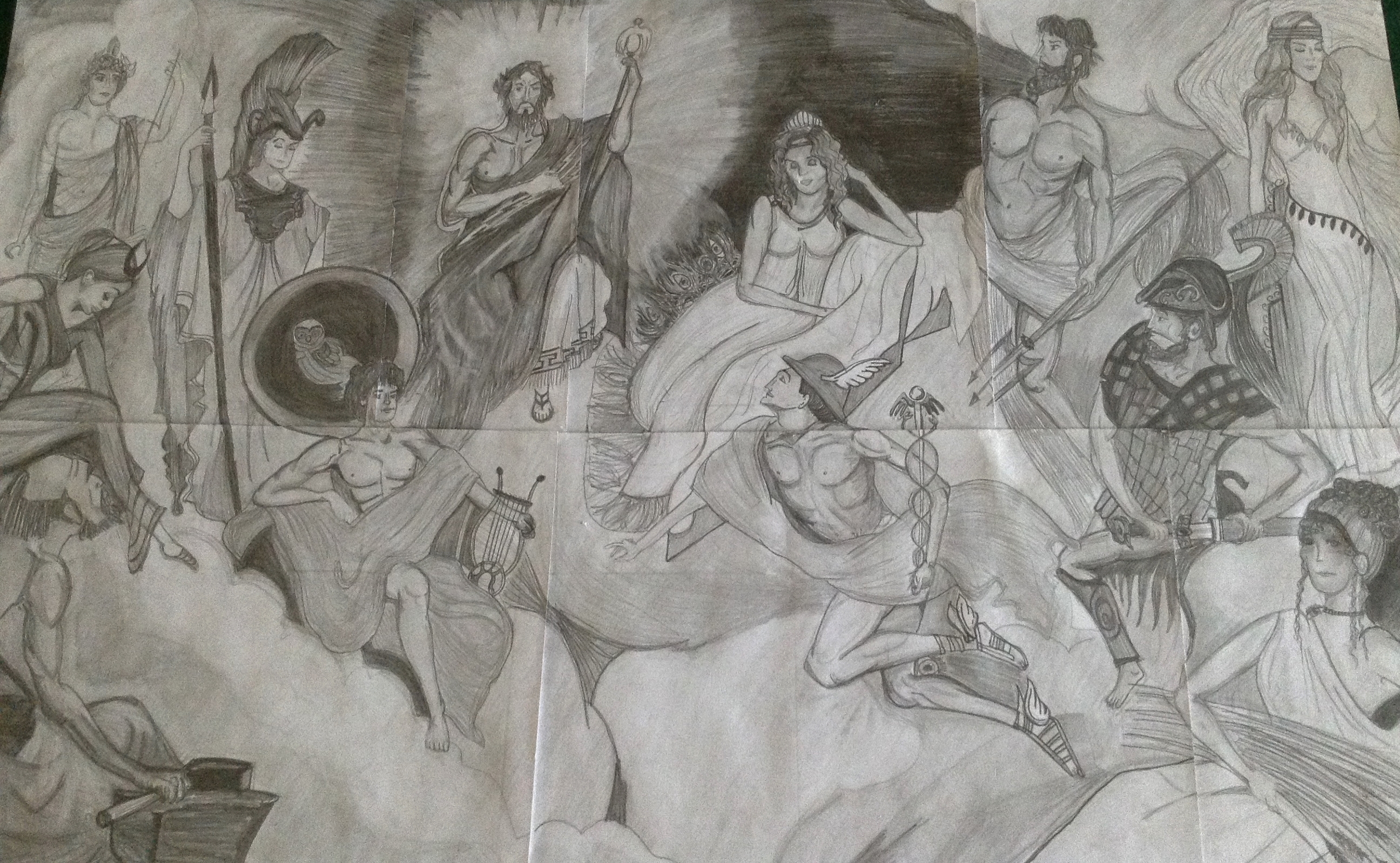
Now she’s a teenager (and a very nice one!) she’s given me the best gift I’ve ever had. Better than anything I could have imagined or expected. I’m currently writing a series of children’s books based around Greek mythology. To celebrate, Connie drew a picture of the 12 Olympian gods. If I ever feel the sting of self-doubt when I write, I just need to look at this and feel revitalised :)

Connie's drawing

For all you Mums out there – hope you had a great day. What’s the nicest thing you’ve ever received?

 What do you get if you mix a time slip adventure with five environmentally aware young girls? The Australian Girl series, published by Wombat Books. The series was inspired by a range of beautiful dolls created by Helen Schofield. Each doll has a distinct personality and background, perfect for make-believe and storytelling: http://www.australiangirldoll.com.au/

annabelleandthemissingturtlesmallAnnabelle and the Missing Turtles, released November 2013, is the latest in the series. Baby sea turtles are disappearing from their habitat on the Queensland coast. No one knows where they went, or why they didn’t follow their instincts and run to the sea. Five young friends vow to solve the mystery and help the environment. They use their rainbow necklace to jump back in time, where they receive some important information from an Aboriginal girl and a famous female explorer.

Aimed at 8 to 10 year olds, the story is about bravery, teamwork, and friendship. It celebrates the spirit of adventure of Australian girls and portrays strong adult female role models.

Rose Inserra, author

So far, each book in the series has been written by a different person. The author of this book is Rose Inserra, who’s had over sixty children’s books published. Rose’s passion for wildlife is evident in her writing. She stresses she was keen to raise children’s awareness of habitat loss and endangered species. Although the book has an underlying educational agenda, it reads like an adventure story. Girls will love it!

You can read more about the book at http://www.wombatbooks.com.au/annabelle-and-the-missing-turtles or visit Rose at her website at http://roseinserra.com/.

Do you feel exhausted after working on your book day after day? Do you feel that nothing you write is good enough? Are you starting to resent writing and wish you were doing something else? It could be that you are verging on writer’s burnout.

https://i0.wp.com/farm5.staticflickr.com/4080/4815205632_632ee48a71.jpg

Burnout isn’t the same as writer’s block, which tends to be short-lived. Burnout lingers. It’s caused by prolonged stress, and leads to mental and physical fatigue. Unchecked, it can cause stress-related illnesses, irritability and poor performance. All too often it ends with the writer giving up completely. Think of all those wonderful books that haven’t been written due to burnt out writers! Following these steps will help you avoid that awful situation.

1. Don’t set unreasonable goals and deadlines

That’s just setting yourself up for failure. Be realistic about what you can achieve and when. Consider all your commitments, your capabilities, and be kind to yourself. Often, however, deadlines are set for us. If you know you’ll struggle to meet a publisher’s proposed deadline, say so before you sign the contract. Try to negotiate a more realistic date. They won’t appreciate you making promises you can’t keep! Although they build a certain degree of flexibility into their schedules, if you miss the deadline you risk looking unreliable and unprofessional. If you’ve already committed yourself, however, notify your publisher as soon as possible so they have a chance to reschedule.

2. Look after yourself

Don’t get so overwhelmed by your work that you forget to look after yourself. Make sure you eat properly – no junk food at your desk. Nothing chases away the writing muse like the smell of greasy fat.
Take the time to exercise but be sure to pick something you enjoy. The idea isn’t to put more pressure on yourself, but to relieve it. Vigorous exercise helps you let off steam, while gentler exercise like yoga helps you relax. Pick your activity and factor it into your daily routine. Even simple walking does wonders, especially if you manage to switch your mind off and enjoy the view.
And don’t forget sleep! Many writers cut down on sleep when a deadline looms. Although it’s okay to do this occasionally, try not to burn the midnight oil regularly. Nobody can function when they are chronically sleep deprived. Your words will be as lacklustre as your mood.

3. Stay connected socially

Don’t isolate yourself. Stay connected with family and friends, both in person and via social media. Remember what matters most in life and keep a sense of perspective. If you need to justify that café outing, feel free to call it research! A word of warning, though. If you’re swamped by work and desperate to escape, you may want to tactfully warn your friends to not ask how the book’s going …

Photo credit: Drew Coffman / Foter / Creative Commons Attribution 2.0 Generic (CC BY 2.0)